Corruption & Accountability
POLS 4641: The Science of Cities
Political Machines
In the late 19th and early 20th centuries, major US cities were often dominated by single-party “political machines”.
Machine politics is a sort of “perverse accountability” (Stokes 2005).
Rather than voters monitoring politicians and rewarding/punishing them for what they do in office…
…political machines monitor their voters, and reward them with patronage / benefits in exchange for votes.
The Fall of the Machines
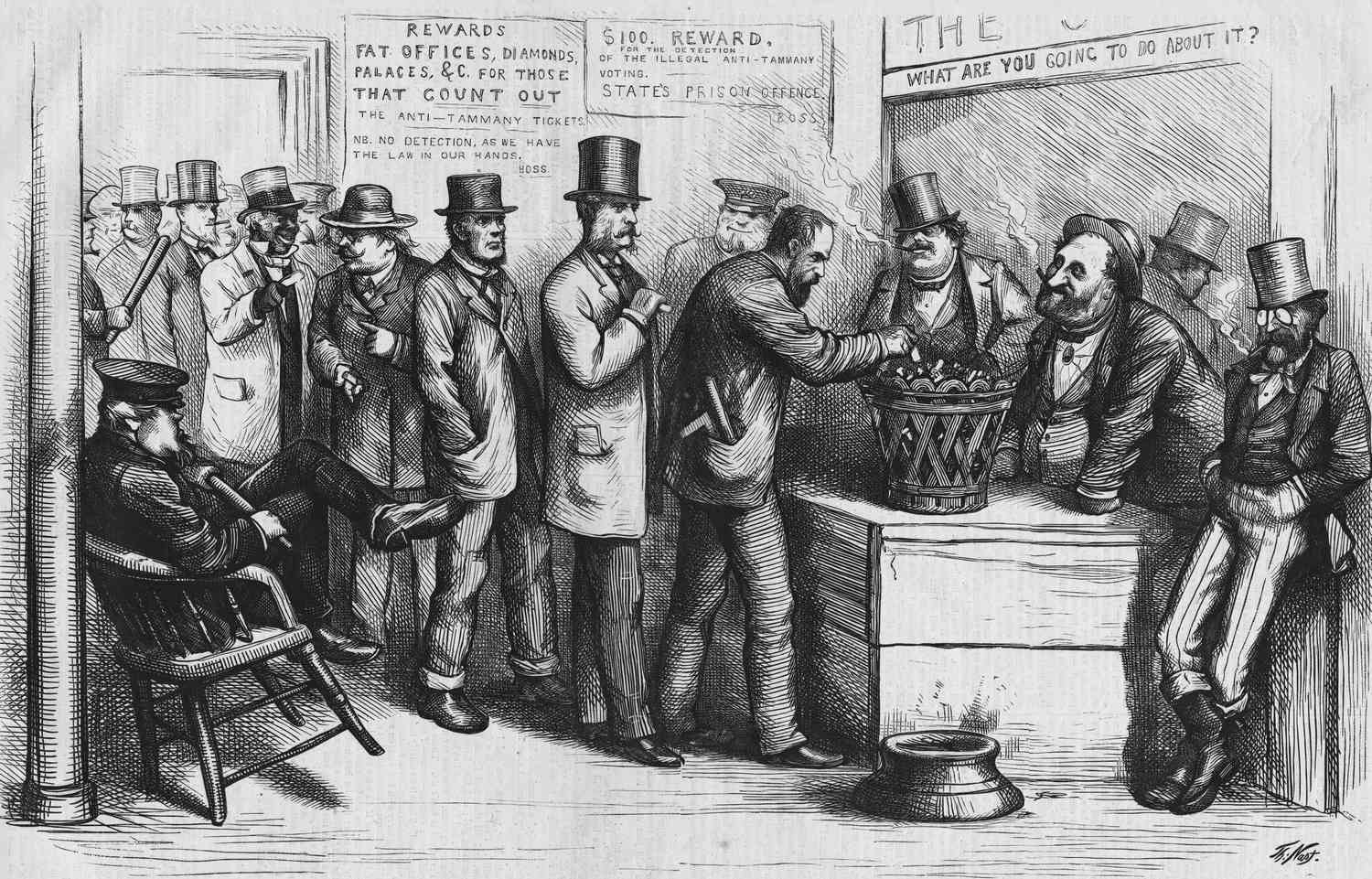
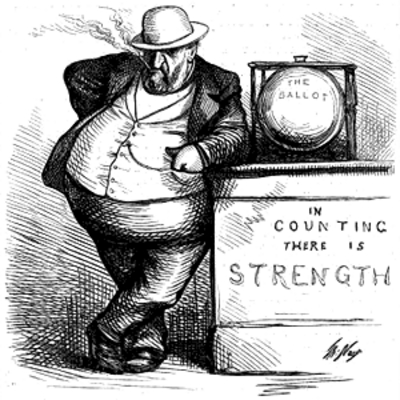
The demise of machine politics (and Tammany Hall in particular) is overdetermined:
Civil service reform (Anzia and Trounstine 2025)
Decline in immigration
Rising incomes (Wolfinger 1972)
The “Australian Ballot” (1888-1950)
The New York Times and Thomas Nast
Isolated Capital Cities
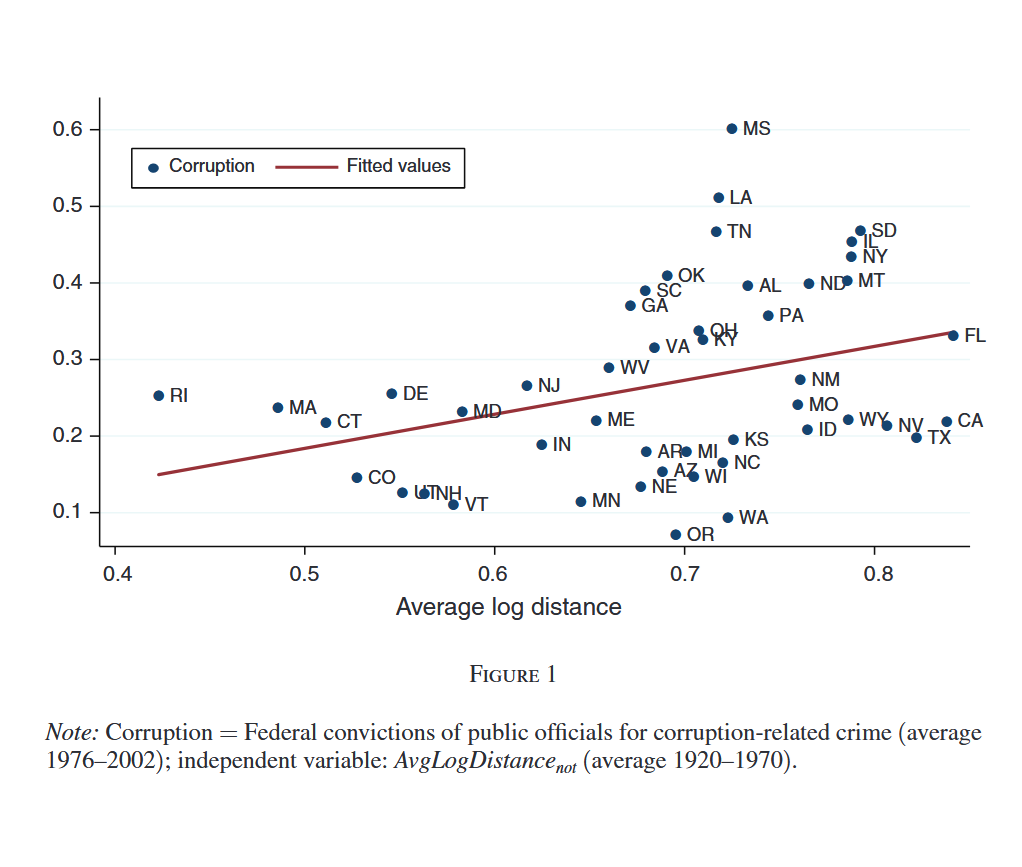
US state capitals that are more geographically isolated from the state’s population tend to have more corruption (Campante and Do 2014).
Why? Journalists cluster near population centers, so isolated capitals receive less newspaper coverage of state politics.
Less coverage → less informed voters → less accountability → more corruption.
They measure isolation as the distance between the capital and the “population centroid” of the state.
Exposing Corrupt Politicians
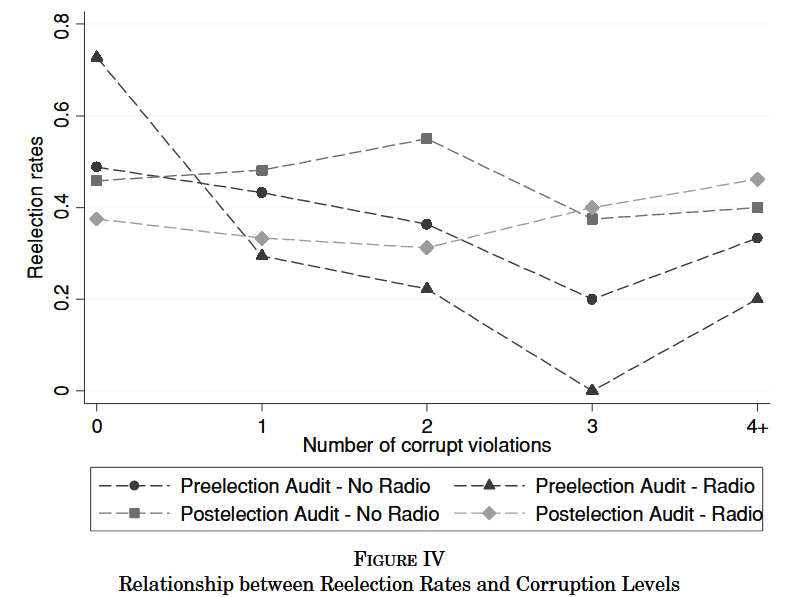
Brazil’s federal government randomly audits municipalities and publicly releases the results (Ferraz and Finan 2008).
Incumbents found to have engaged in corruption were significantly more likely to lose reelection.
The effect was largest in municipalities with local radio stations — consistent with the media-accountability mechanism.
The Decline of Local Newspapers
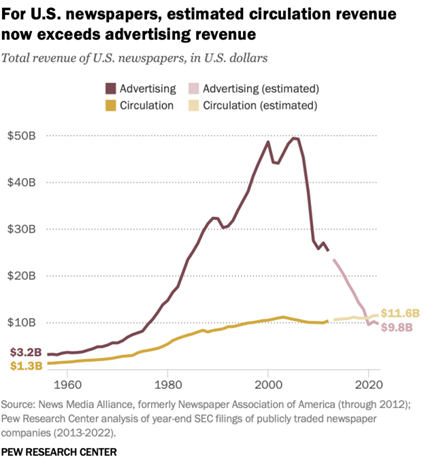
Local newspapers were historically sustained by advertising revenue — classifieds, display ads, and circulars.
The internet destroyed that model: Craigslist eliminated classifieds; Google and Facebook captured display advertising.
As ad revenue collapsed, papers cut newsroom staff, reduced coverage, and in many cases closed entirely.
The result: dramatic declines in both circulation and the number of journalists covering local government.
Wrap Up
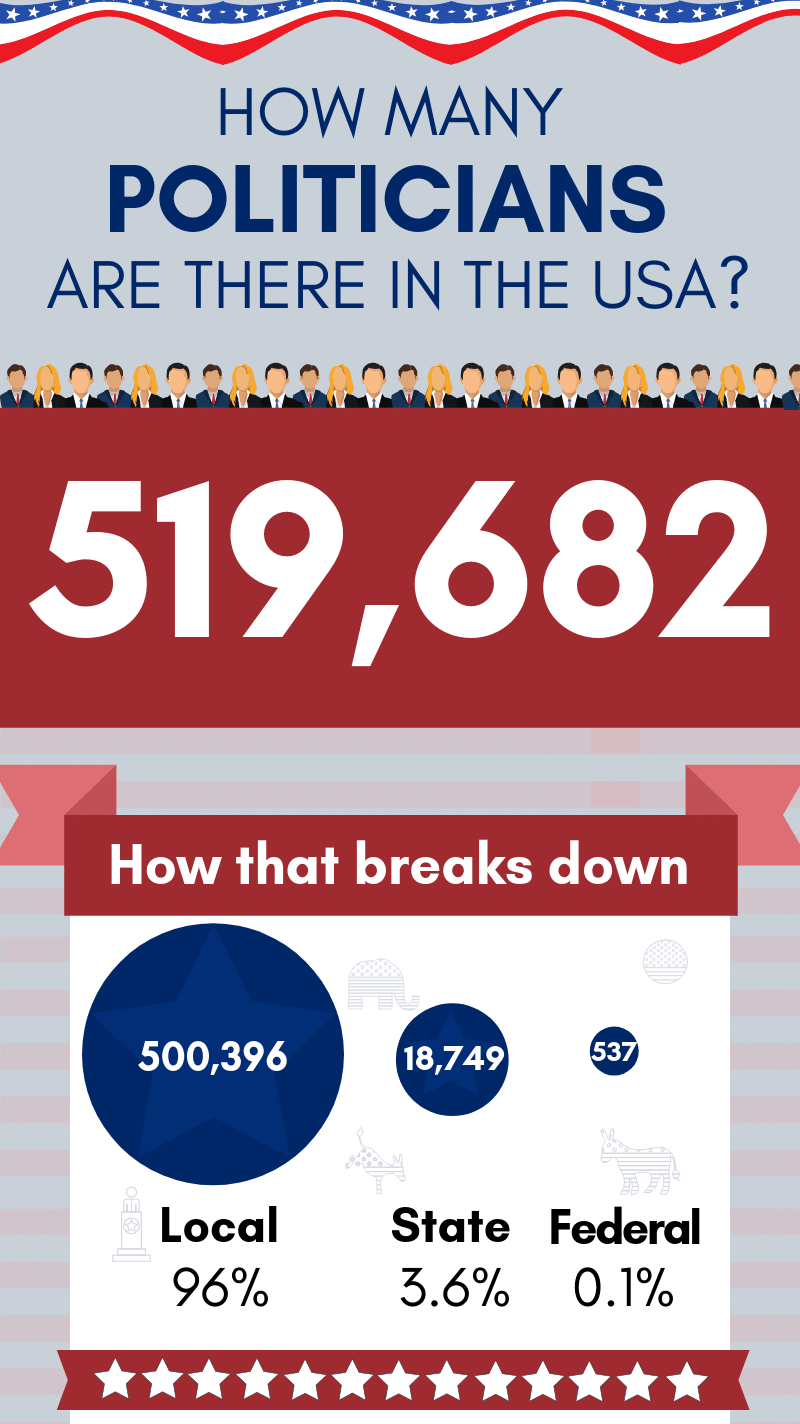
There are half a million elected officials in the United States. Voters cannot hold them accountable without information.
Local journalism is the primary source of that information — and it has been in freefall for thirty years.
I’m cautiously optimistic that LLMs can increase the productivity enough to make small, digital local newspapers a viable business model.
But effective investigative journalism requires “boots on the ground”, for journalists to actually live in the places they cover (Campante and Do 2014).