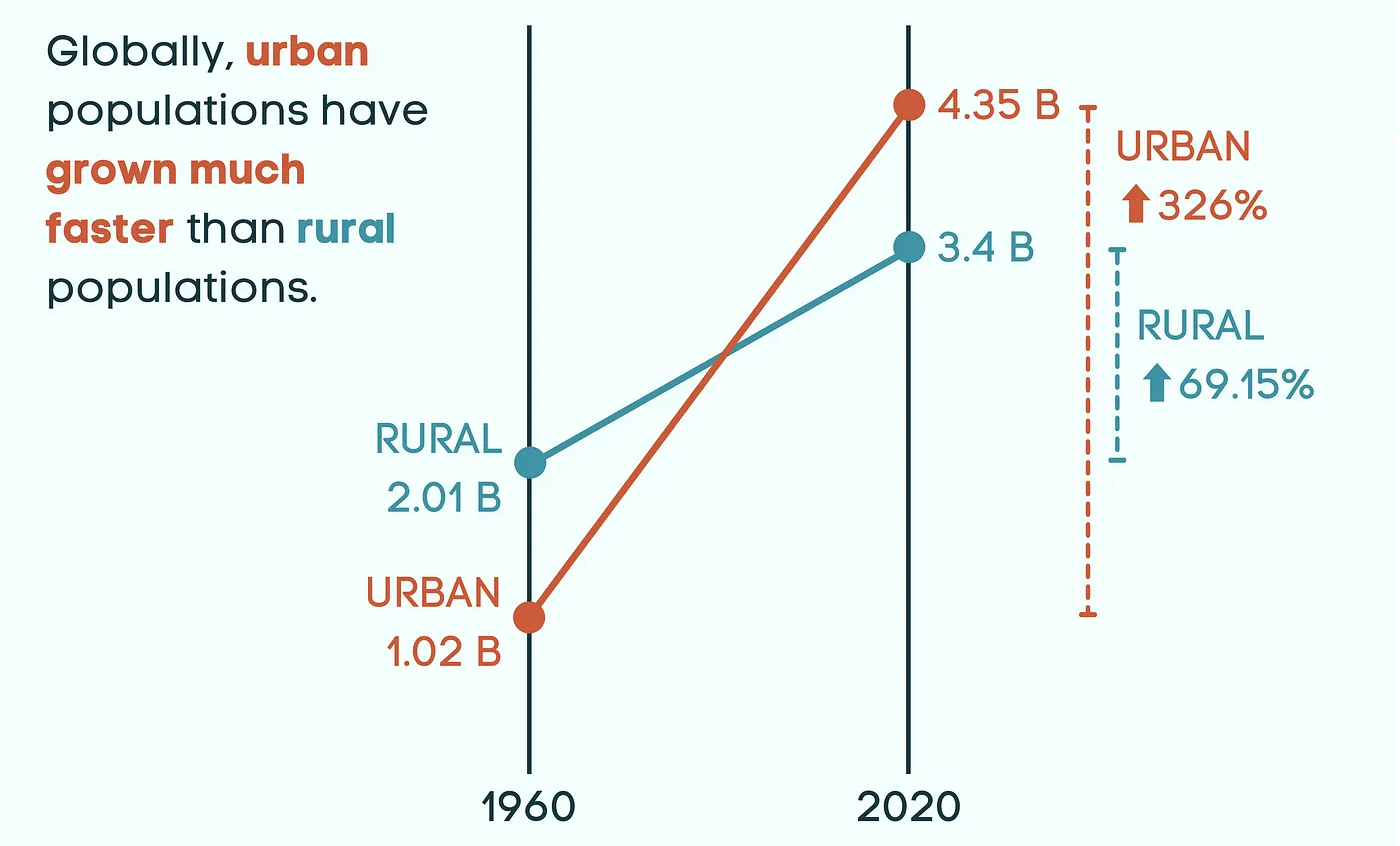
Urbanization
POLS 4641: The Science of Cities
Urbanization
Which city do you think is growing the fastest (people per hour)?
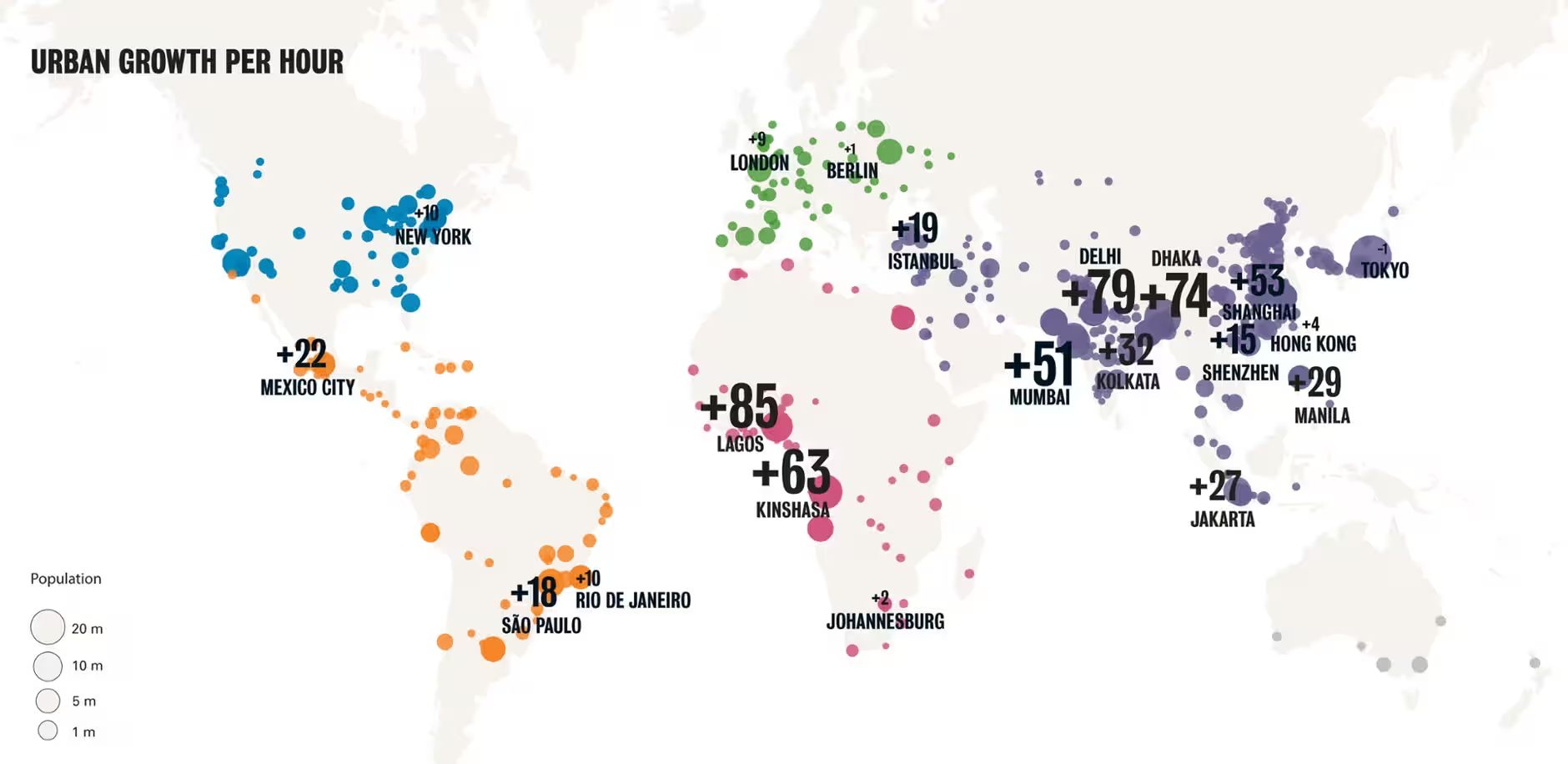
Urbanization
For all the reasons we discussed last week, cities create economic opportunities. Urbanized countries tend to be wealthier.
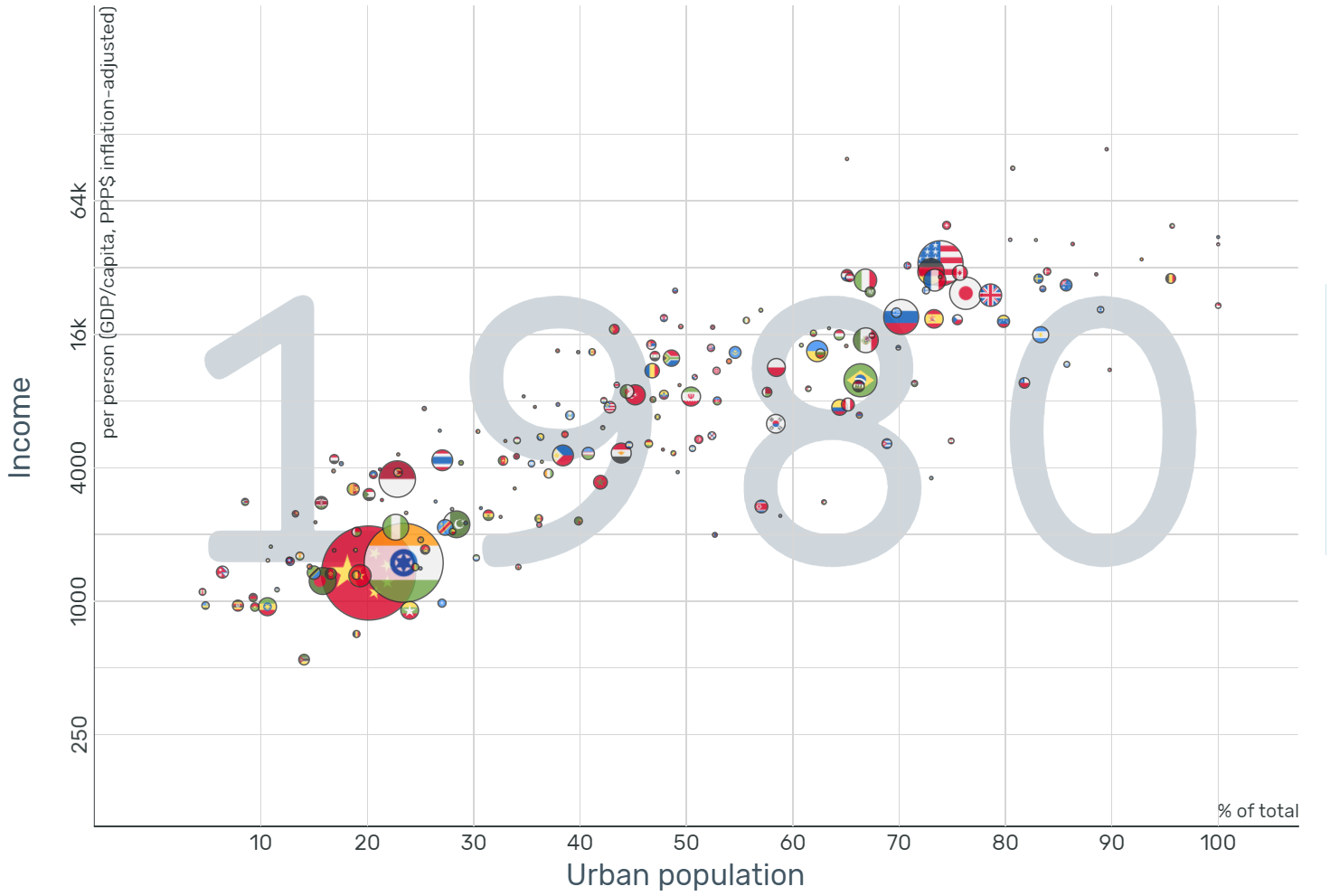
Theory
When should we expect a country to urbanize?
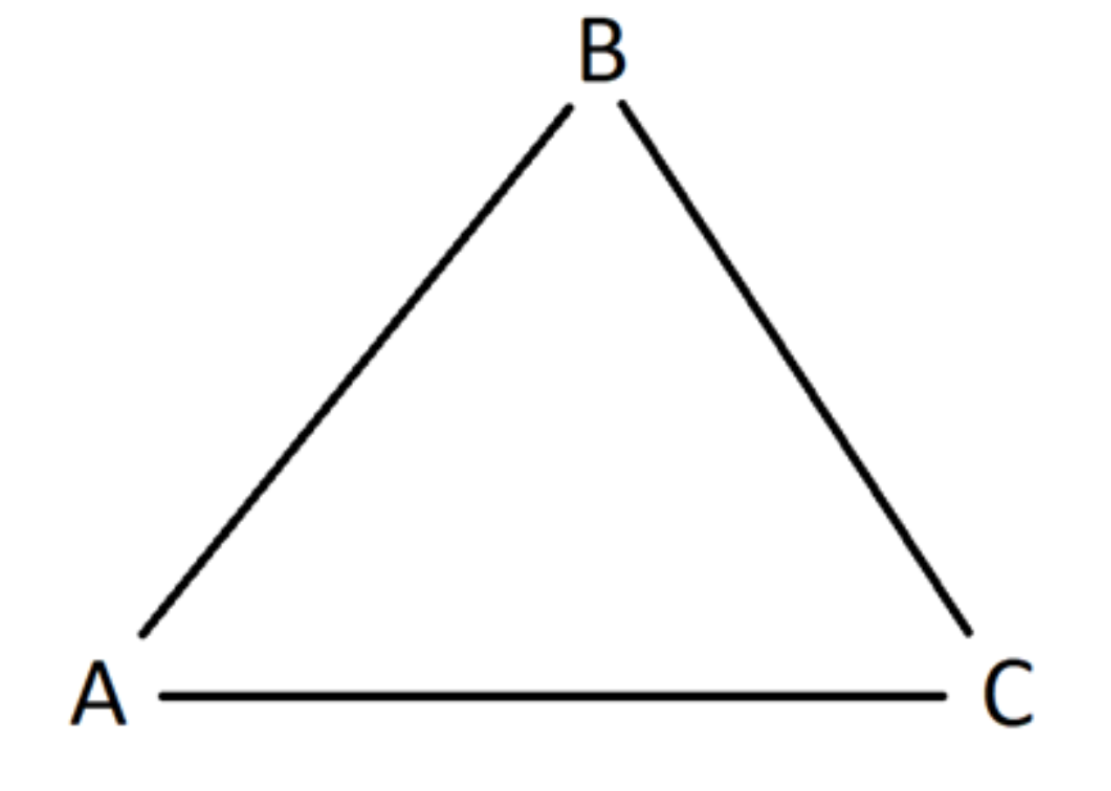
To get some intuition, let’s consider a stripped-down version of the mathematical model in Krugman (1991).
- Three villages: A, B, and C
- \(N\) people total. \(F\) people are farmers. \(N-F\) are weavers.
- It costs $1 for a solitary weaver to make a shirt.
- But there are scale economies. It only costs $(1 - c) to make a shirt if all the weavers work together in one place.
- It costs \(T\) to transport a shirt to another village.
US Urbanization (19th Century)
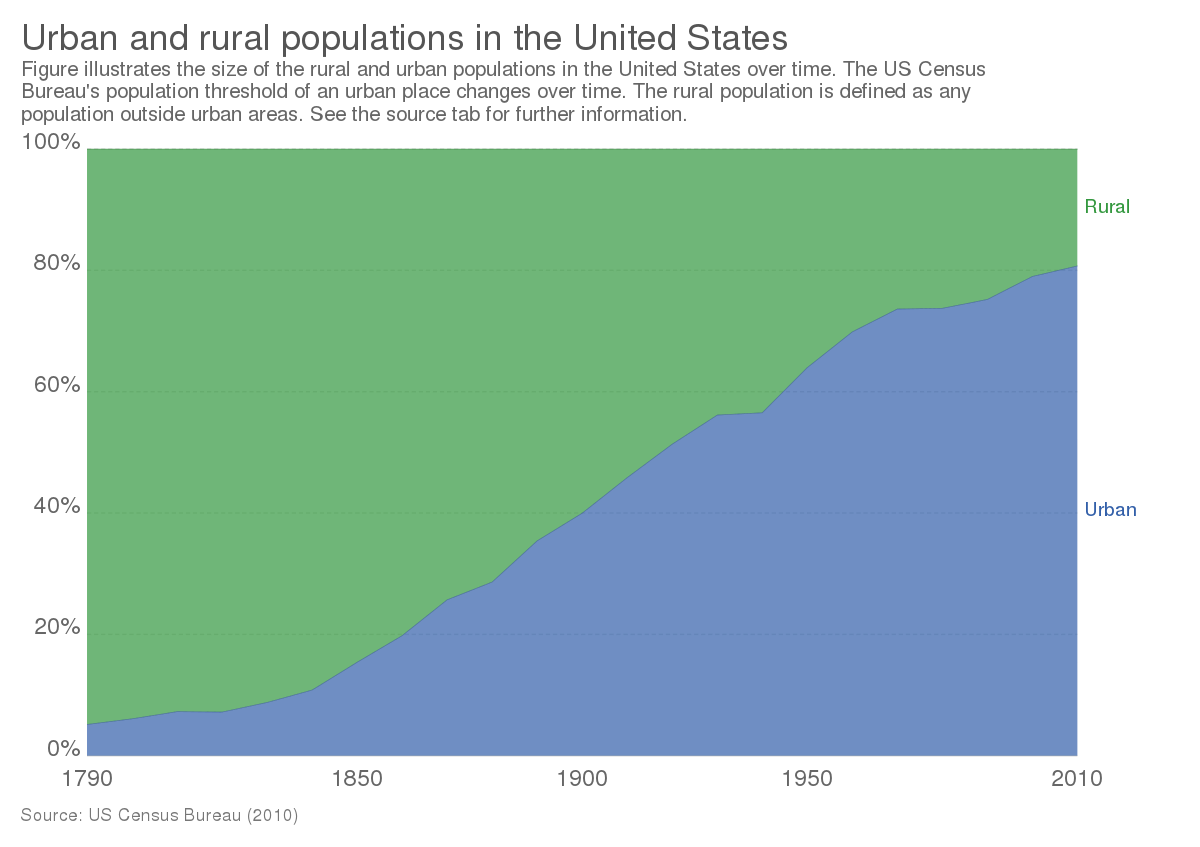
US Urbanization (19th Century)
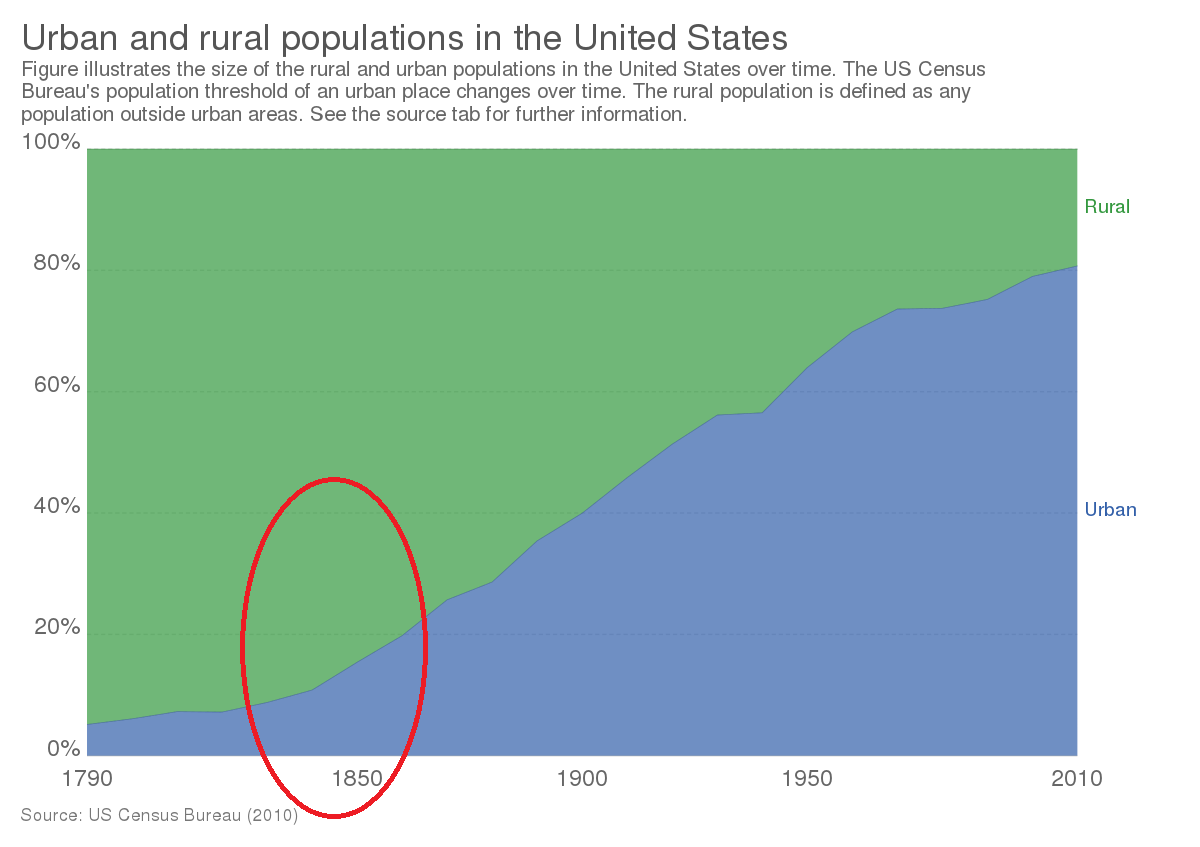
US Urbanization (19th Century)
Agricultural Productivity \(\left(\frac{F}{N}\right)\):
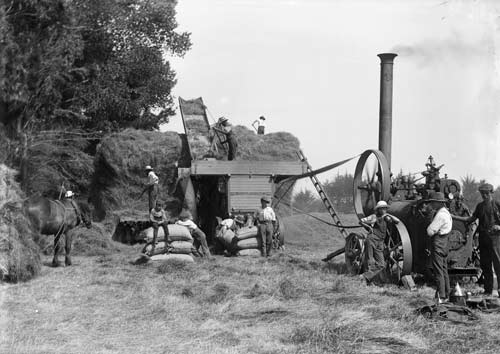
The “2nd Agricultural Revolution” significantly increased agricultural productivity.
These improvements meant that far fewer people needed to work on farms in order to produce the same amount of food.
In the early 1800s, 90% of Americans lived on farms.
That number is roughly 1-2% today.
US Urbanization (19th Century)
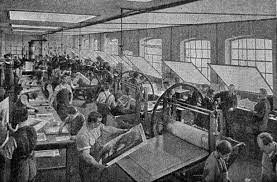
Scale Economies \((c)\):
At the same time that productivity improvements made it so that fewer people needed to work on farms…
…we developed new technologies that made it particularly lucrative to agglomerate workers into cities.
US Urbanization (19th Century)
Transportation Costs \((T)\):
New modes of transportation dramatically reduced the cost of moving goods across the country.
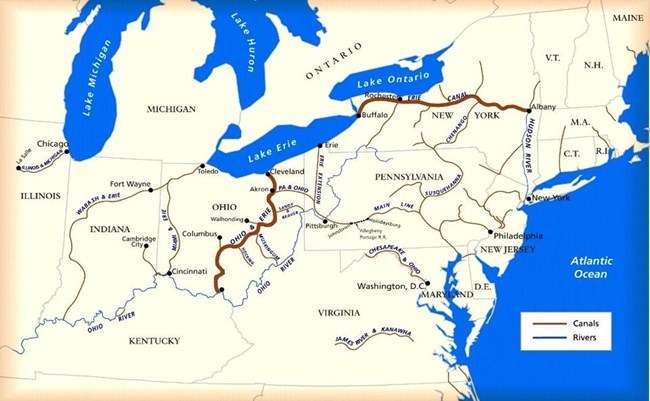
Canals linked the Great Lakes to New York and the Mississippi River.
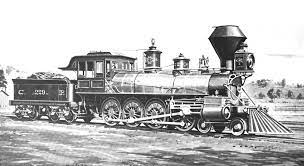
Railroads opened up areas of the country not previously connected by water routes.
US Urbanization (19th Century)
These three technological advances – improvements in transportation, agriculture, and scale economies – transformed US society.
From a country where 90% of people lived on farms to a predominantly urban nation within 50 years.
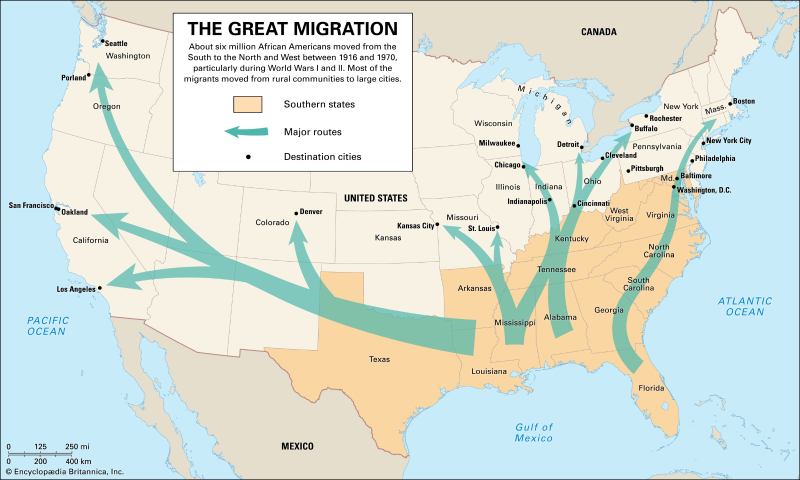
- One of the historical legacies of this era is the “Great Migration”.
The Paleolithic in a Nutshell
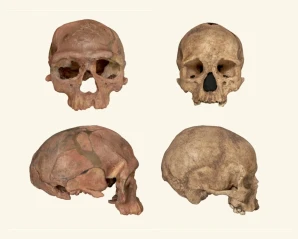
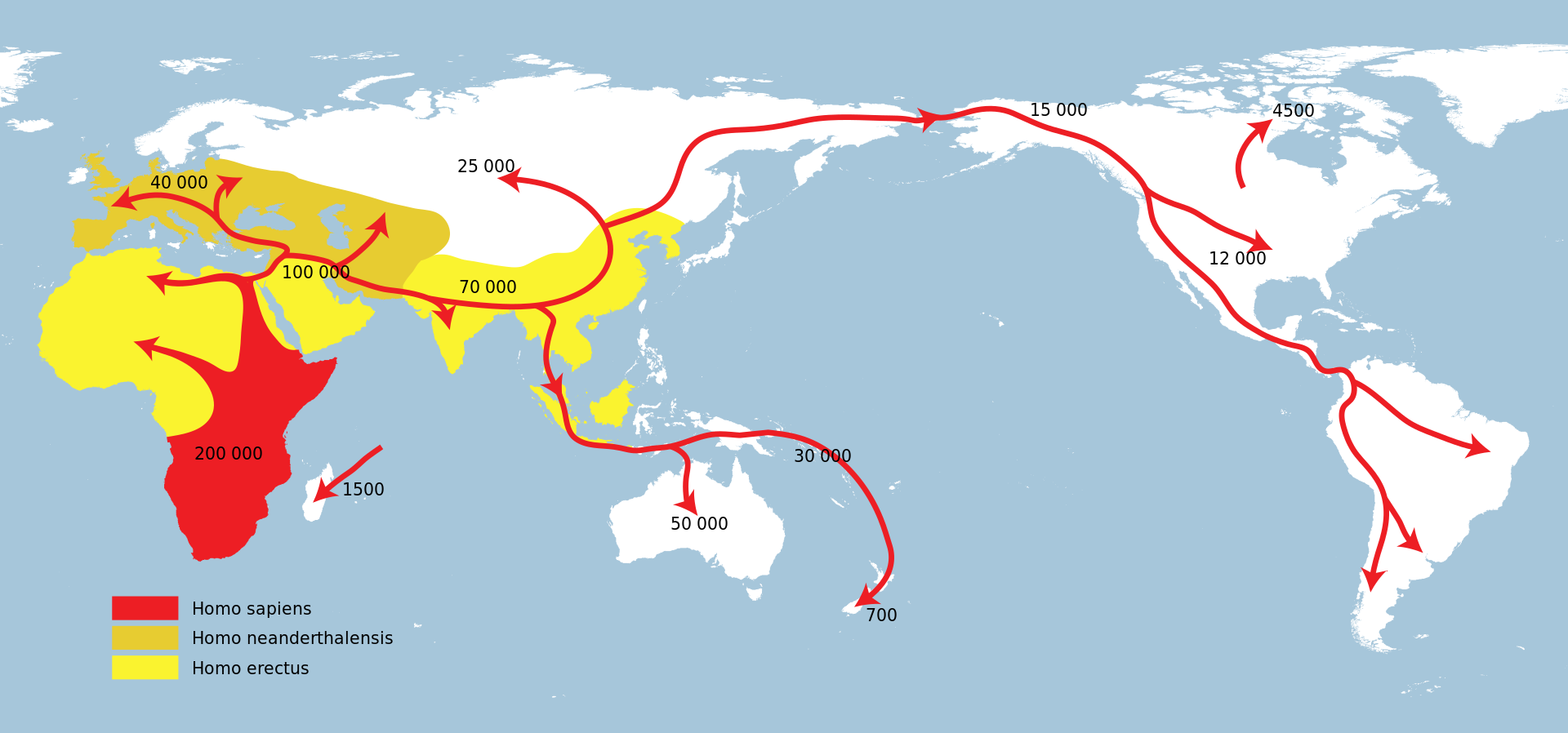
- We see anatomically modern Homo sapiens appear around 200,000 years ago.
The Paleolithic in a Nutshell
- We see anatomically modern Homo sapiens appear around 200,000 years ago.
- By 12,000 BC, we’re pretty much everywhere. Even the Americas.
The Paleolithic in a Nutshell
- We see anatomically modern Homo sapiens appear around 200,000 years ago.
- By 12,000 BC, we’re pretty much everywhere. Even the Americas.
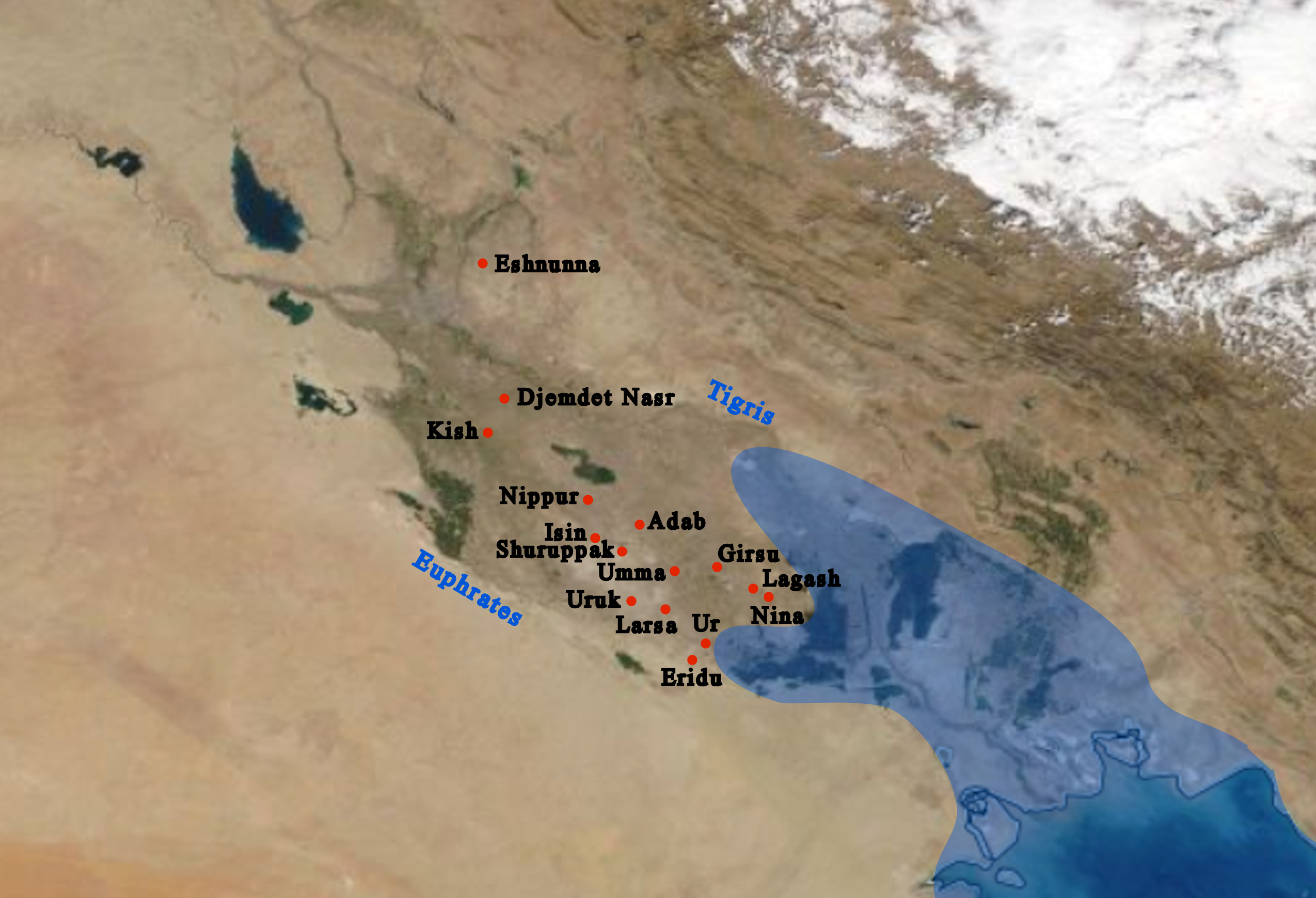
- But we don’t see evidence of “civilization” (i.e. people who live in cities) until around 3,000 BC.
The Paleolithic in a Nutshell
- We see anatomically modern Homo sapiens appear around 200,000 years ago.
- By 12,000 BC, we’re pretty much everywhere. Even the Americas.
- But we don’t see evidence of “civilization” (i.e. people who live in cities) until around 3,000 BC.
- What took us so long???
The Problem: Large-Scale Societies
It’s wicked hard to organize large groups of people.
As the size of a group increases, it becomes more difficult to manage relationships and resolve disputes.
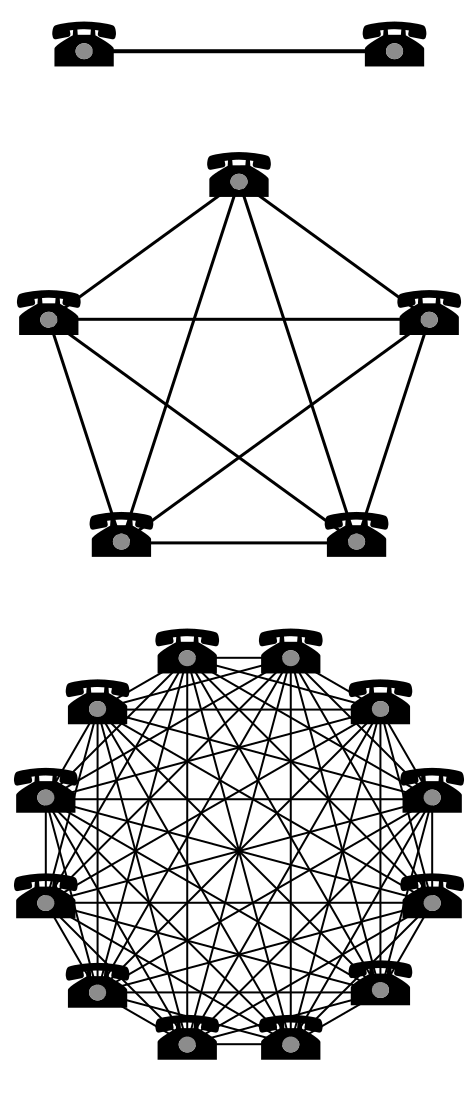
In an apartment with 4 roommates, there are 6 possible sources of conflict.
In a club with 30 members, that number is 435.
In a sorority with 300 members, there are 45,000 possible conflicts.
This is Metcalfe’s Law again.
The Problem: Large-Scale Societies
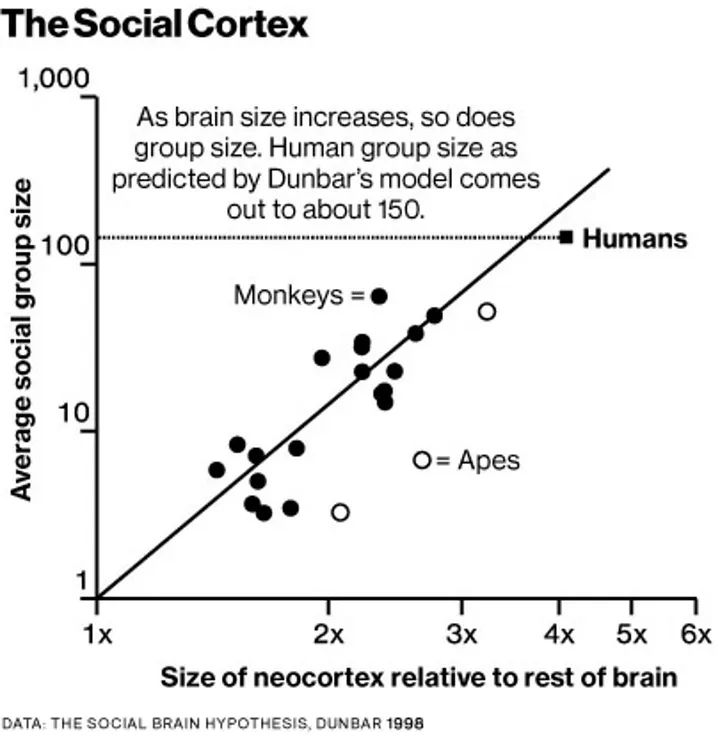
Traditional societies tend to be organized in small bands of 100-200 individuals (Dunbar 1998).
One reason we have such a large neocortex is to help keep track of all these social relationships.
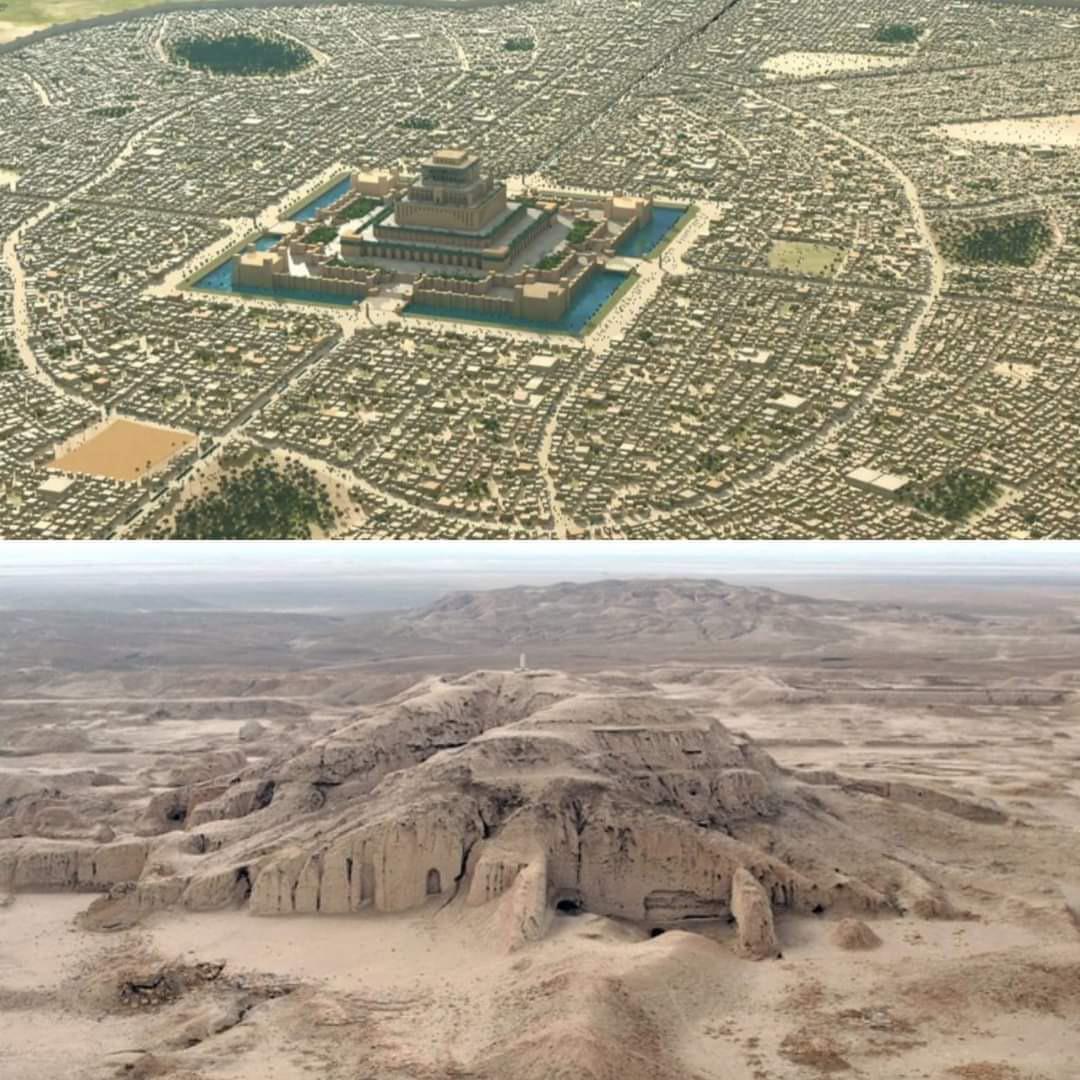
But a city like Uruk (est. pop. 40,000) is well beyond what our brains can support.
The Urban Revolution
Without a state to organize large-scale collective action, settle disputes, and administer laws, cities with many thousands of people would be impossible.
Around 3,000 BC in Mesopotamia, we see the confluence of three innovations that change everything:
- Transporatation (rivers)

The Urban Revolution
Without a state to organize large-scale collective action, settle disputes, and administer laws, cities with many thousands of people would be impossible.
Around 3,000 BC in Mesopotamia, we see the confluence of three innovations that change everything:
- Transporatation (rivers)
- Agriculture (grains)

The Urban Revolution
Without a state to organize large-scale collective action, settle disputes, and administer laws, cities with many thousands of people would be impossible.
Around 3,000 BC in Mesopotamia, we see the confluence of three innovations that change everything:
- Transporatation (rivers)
- Agriculture (grains)
- Scale Economies (writing)
Rivers Made Cities
- It’s no coincidence that every early civilization is found at the end of a big river.
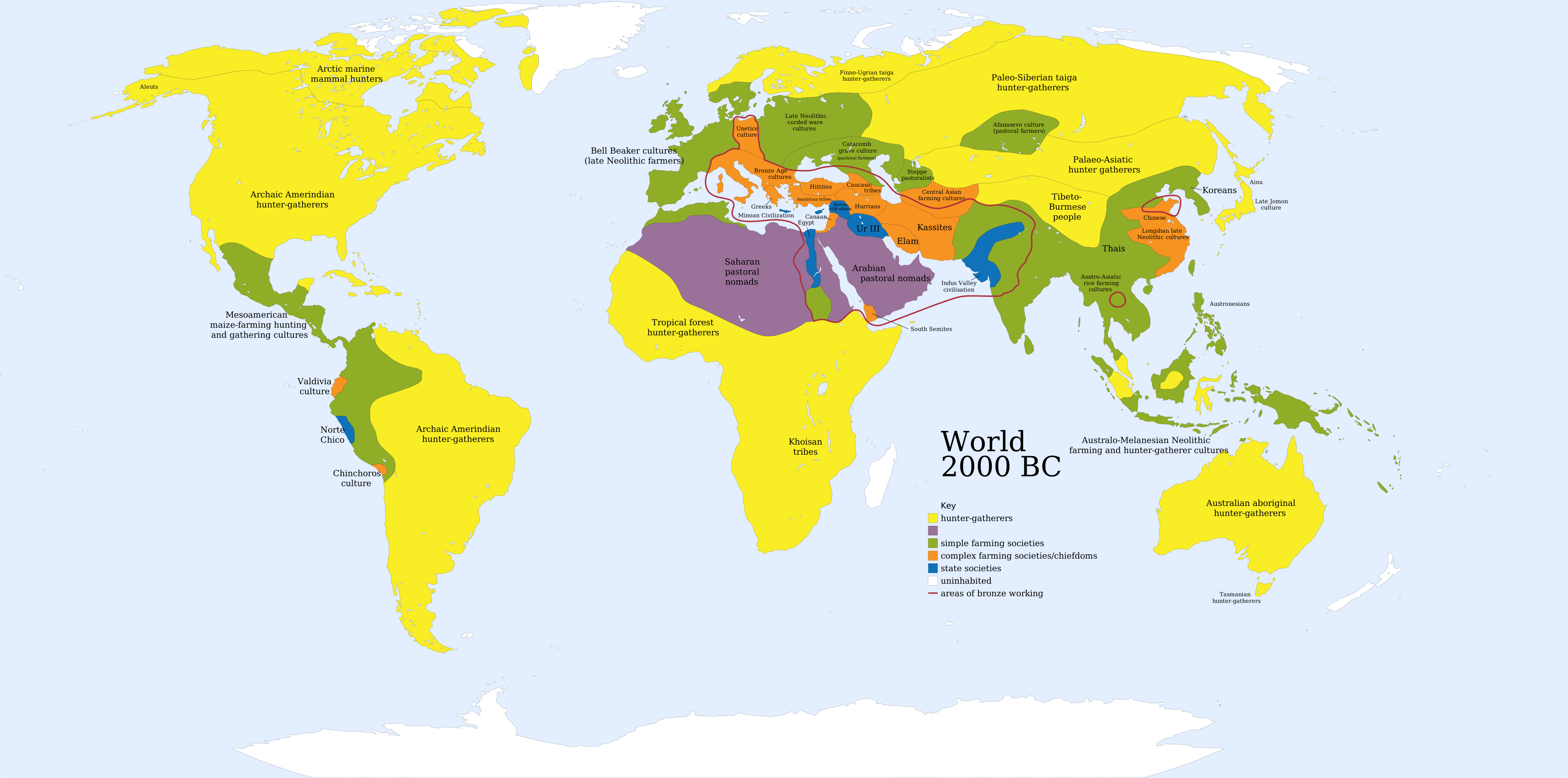
Rivers provide:
- fertile soil
- frictionless transportation.
Rivers Made Cities
- To maintain a city with tens of thousands of people you need:
Thousands of acres of land under cultivation
Enormous quantities of wood (both for fires & construction)
Goods traded from other ecological zones
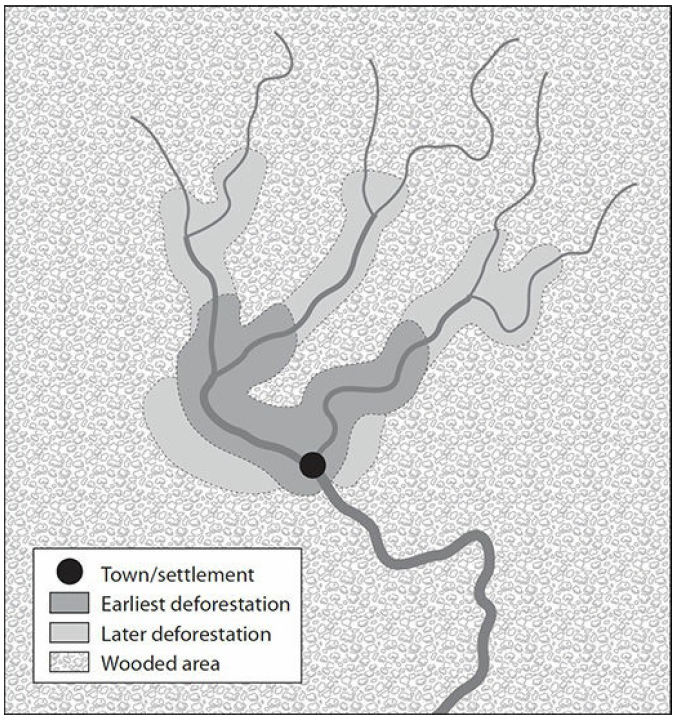
This would be logistically impossible without a method for reliably transporting goods over long distances.
Grain Made Cities
A Puzzle: Why did all these early cities rely on cereal grains (wheat, barley, rice, maize) instead of other kinds of crops?
Grain-only diets are bad for you!
Comparing skeletons of agriculturalists vs. hunter-gatherers during this period, the former were malnourished and several inches shorter on average (Cohen, Wood, and Milner 2015).

Grain Made Cities
A Puzzle: Why did all these early cities rely on cereal grains (wheat, barley, rice, maize) instead of other kinds of crops?
Grain-only diets are bad for you!
Comparing skeletons of agriculturalists vs. hunter-gatherers during this period, the former were malnourished and several inches shorter on average (Cohen, Wood, and Milner 2015).
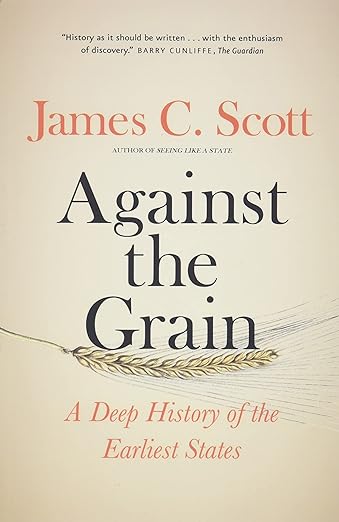
But from the point of view of the elites, grain is the perfect crop. It is easy to tax because it all ripens above-ground at the same time (Scott 2017).
Early city-states were stationary bandits (Olson 1993).
Grain Made Cities
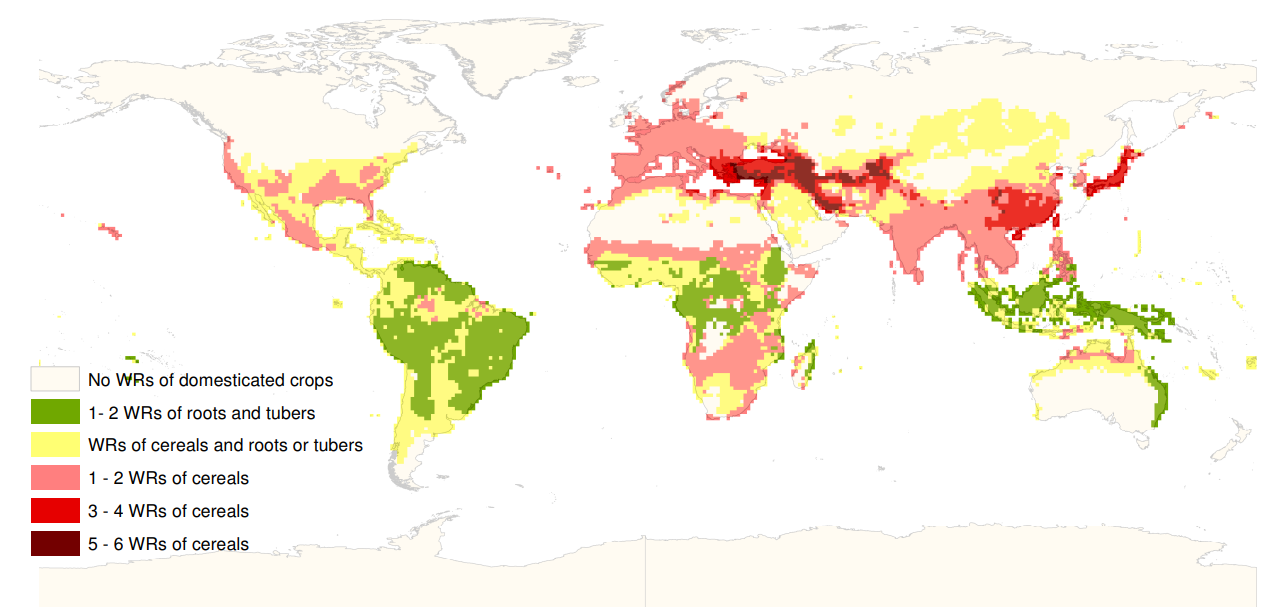
So it makes sense that cities first appears in the places where there are lots of wild cereals available for domestication (Mayshar, Moav, and Pascali 2021).
Writing Made Cities
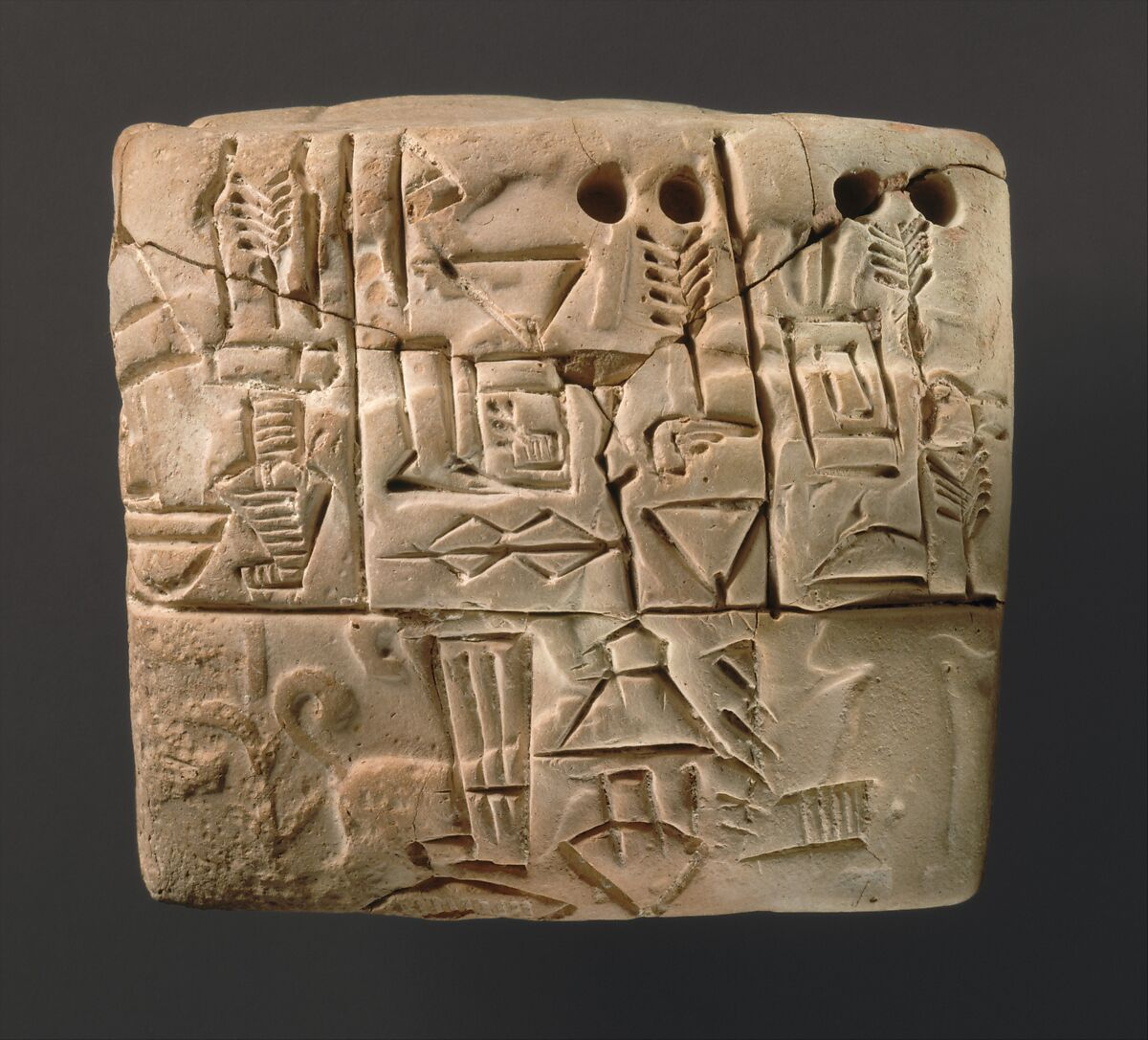
The last piece of the puzzle, which falls into place around 3000 BC, is writing.
Stationary banditry isn’t possible without a way to keep records. How many people live here? How much grain are they producing?
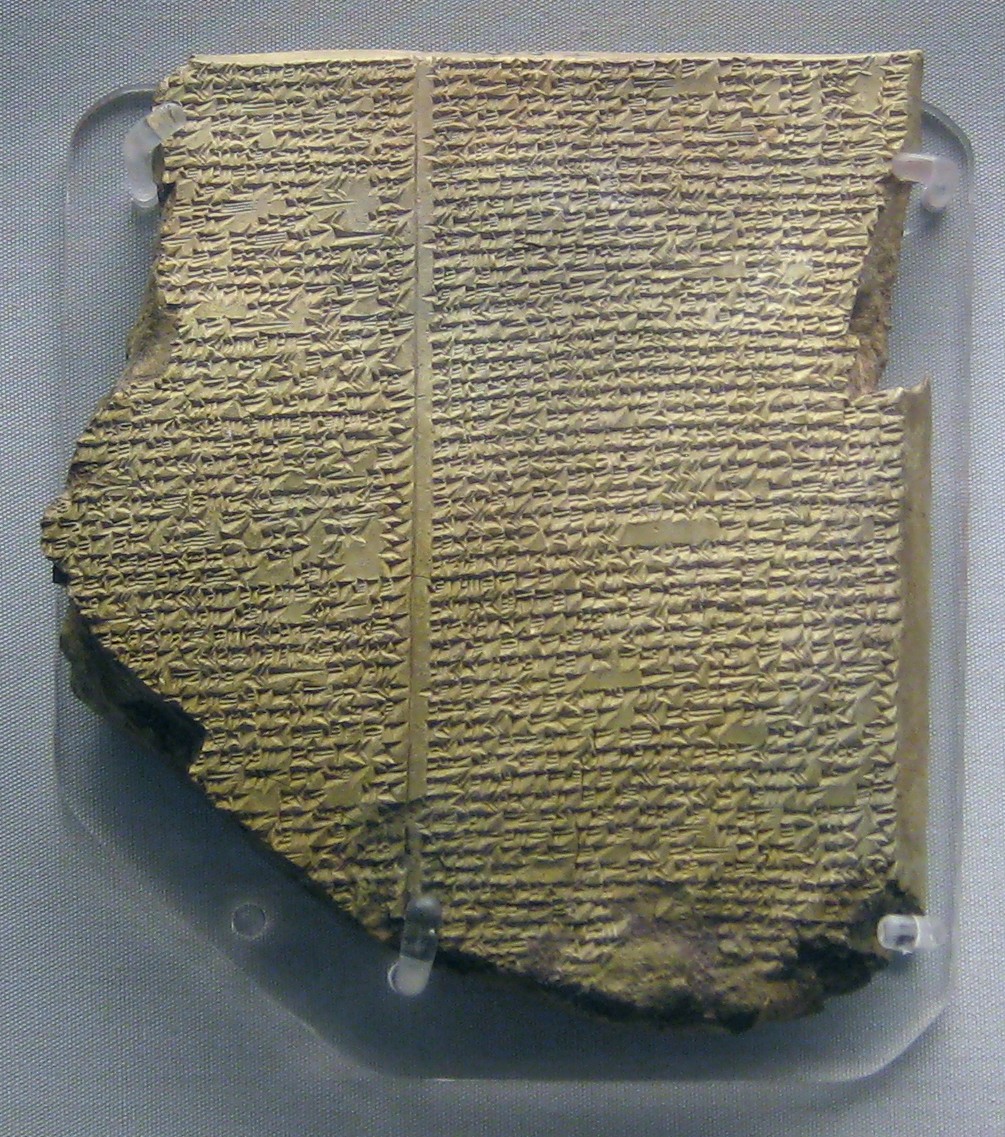
- The earliest “proto-cuneiform” tablets discovered are dedicated to record-keeping, not storytelling.
Writing Made Cities
The last piece of the puzzle, which falls into place around 3000 BC, is writing.
Stationary banditry isn’t possible without a way to keep records. How many people live here? How much grain are they producing?
- The earliest “proto-cuneiform” tablets discovered are dedicated to record-keeping, not storytelling.
- We don’t see cuneiform being used for storytelling (e.g. Epic of Gilgamesh) for another thousand years.
Writing Made Cities
The last piece of the puzzle, which falls into place around 3000 BC, is writing.
Stationary banditry isn’t possible without a way to keep records. How many people live here? How much grain are they producing?
- The earliest “proto-cuneiform” tablets discovered are dedicated to record-keeping, not storytelling.
- We don’t see cuneiform being used for storytelling (e.g. Epic of Gilgamesh) for another thousand years.
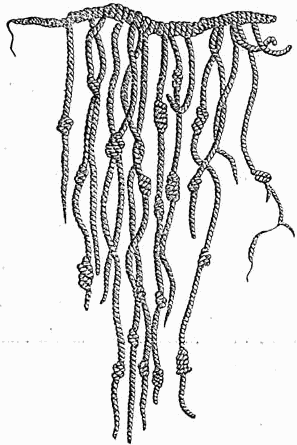
- Every early city had some form of record-keeping, even if it didn’t look like writing (e.g. Quipu in Norte Chico).
Europe Urbanizes (1500-1800)
- Between 800 and 1800, we see a series of “urban revolutions” in Europe, starting with Italian city-states, then the Low Countries, and finally Britain.
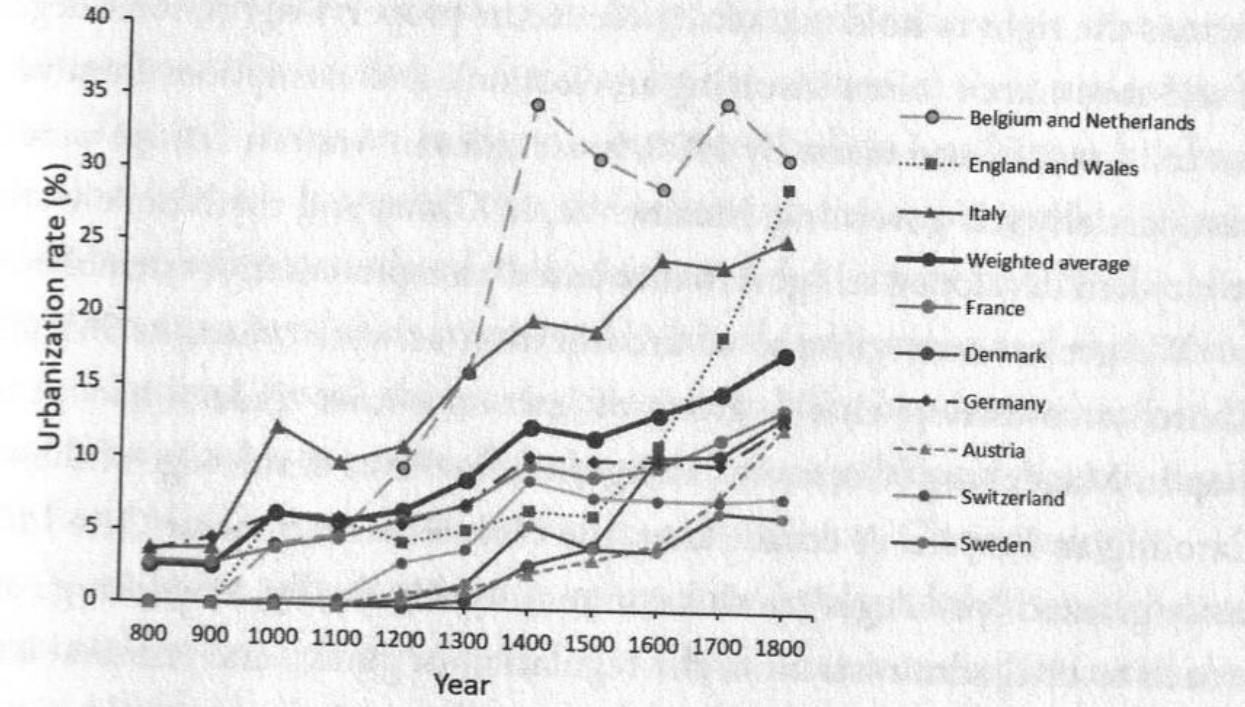
What happened?
That will be a central topic of our deep dives on Thursday.