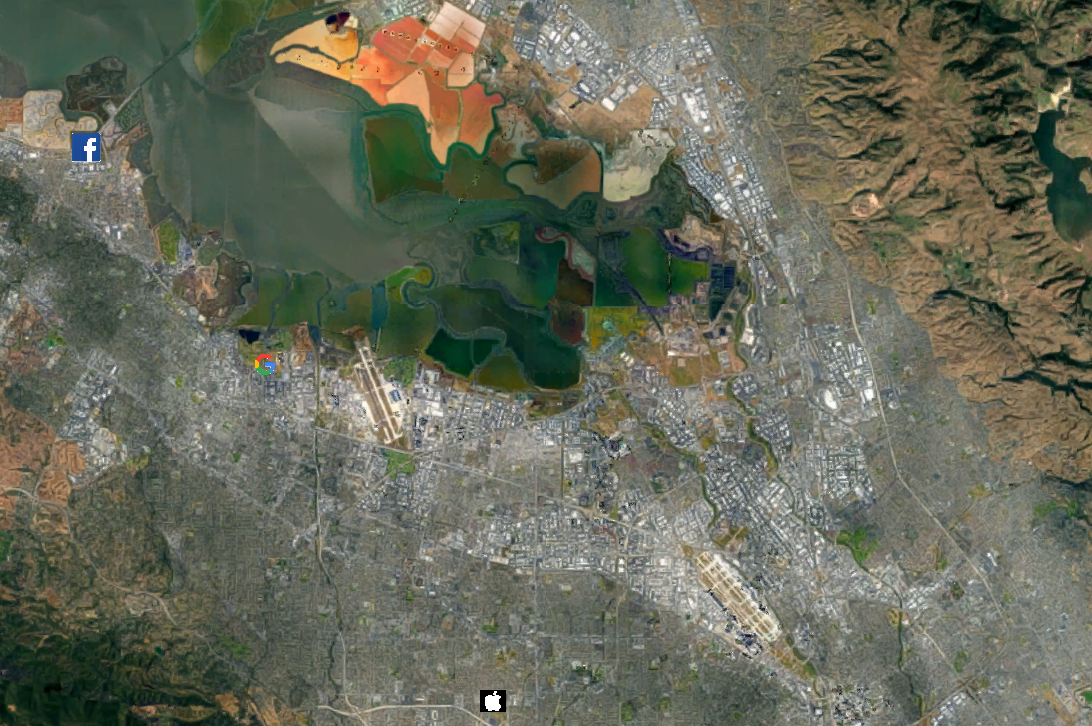
Why Cities?
POLS 4641: The Science of Cities
Warmup
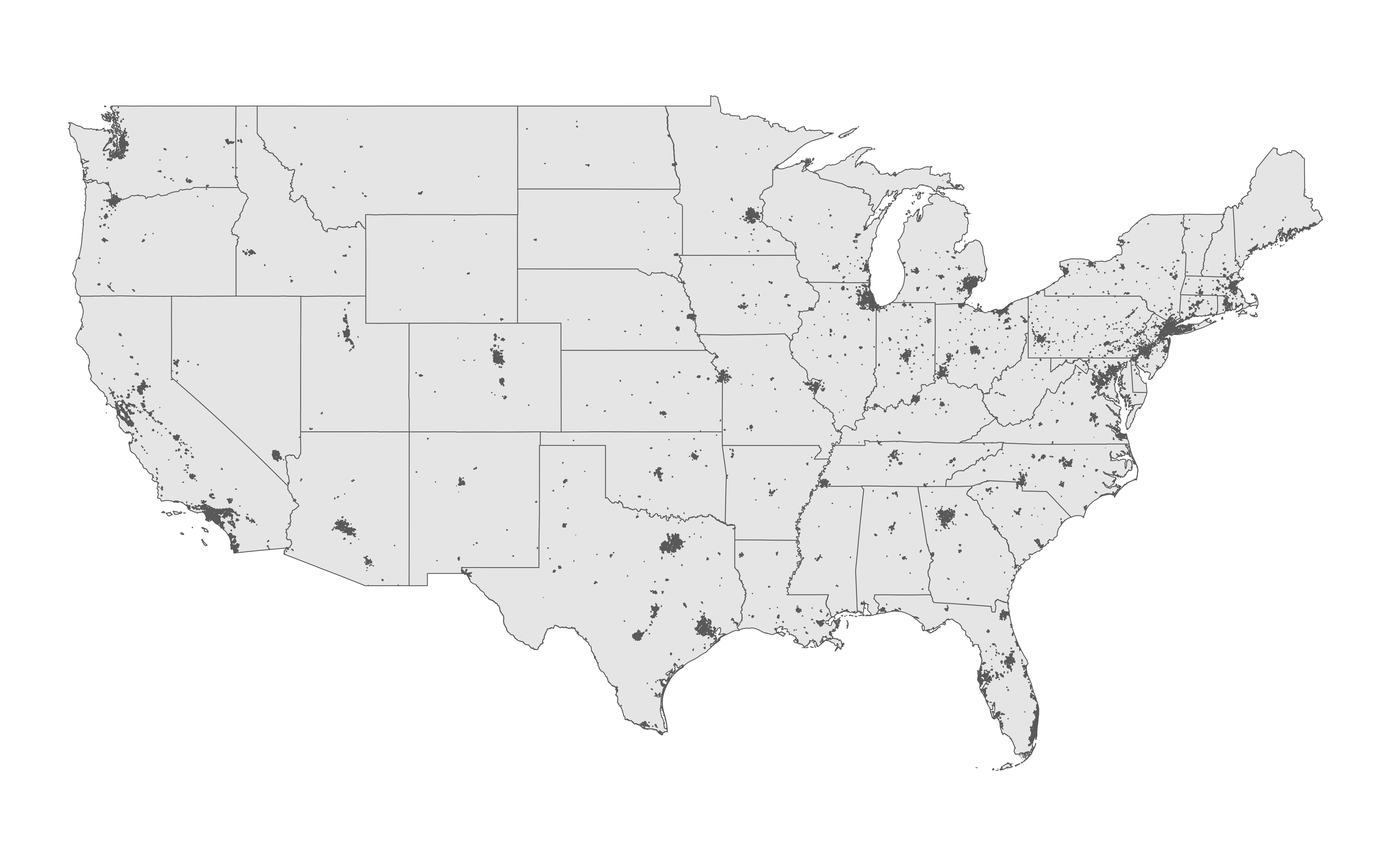
In the United States (minus Alaska and Hawaii), half of the population lives on roughly 1% of the land.
Land Values
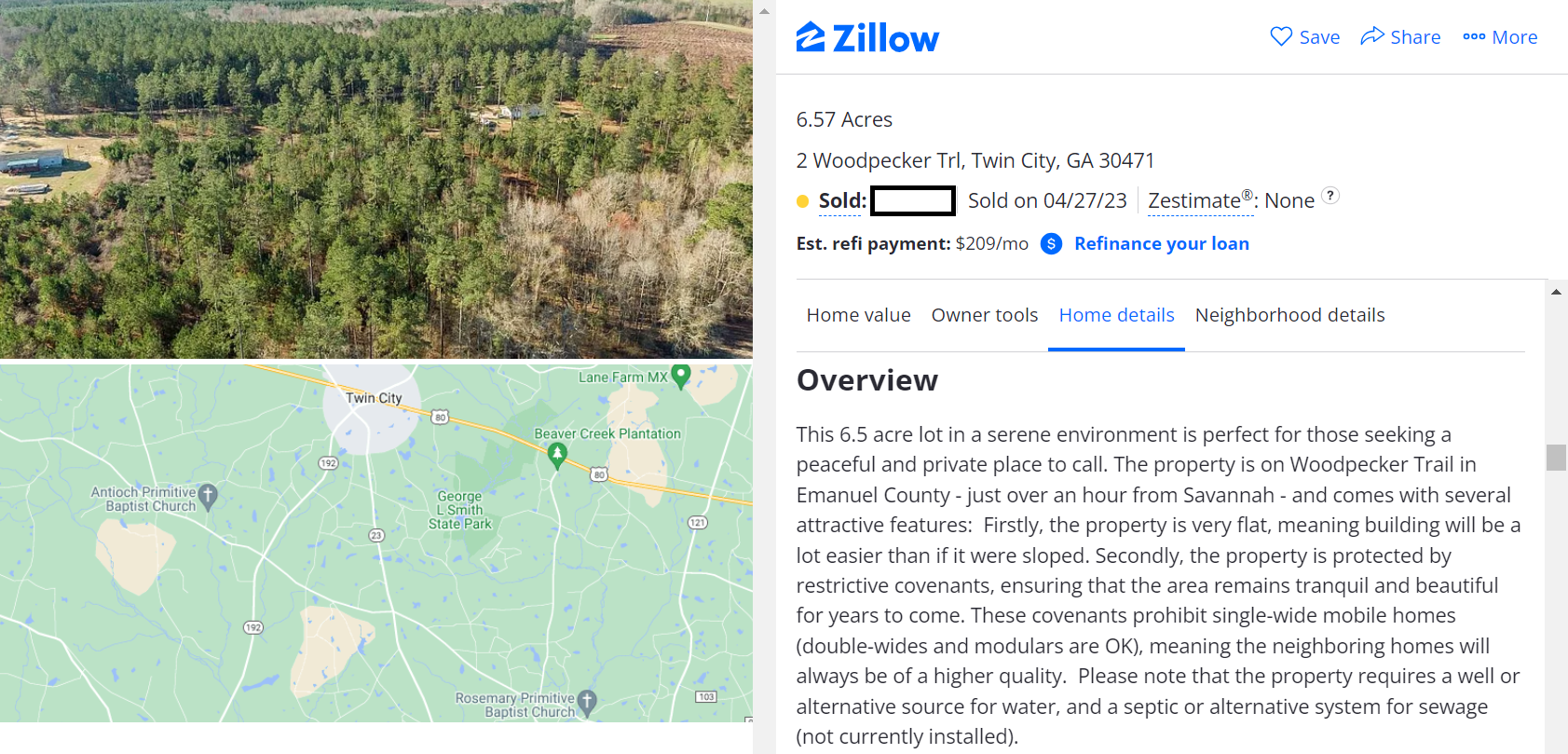
Let’s play The Price Is Right. How much did this 6.5 acre lot sell for in 2023?
Land Values
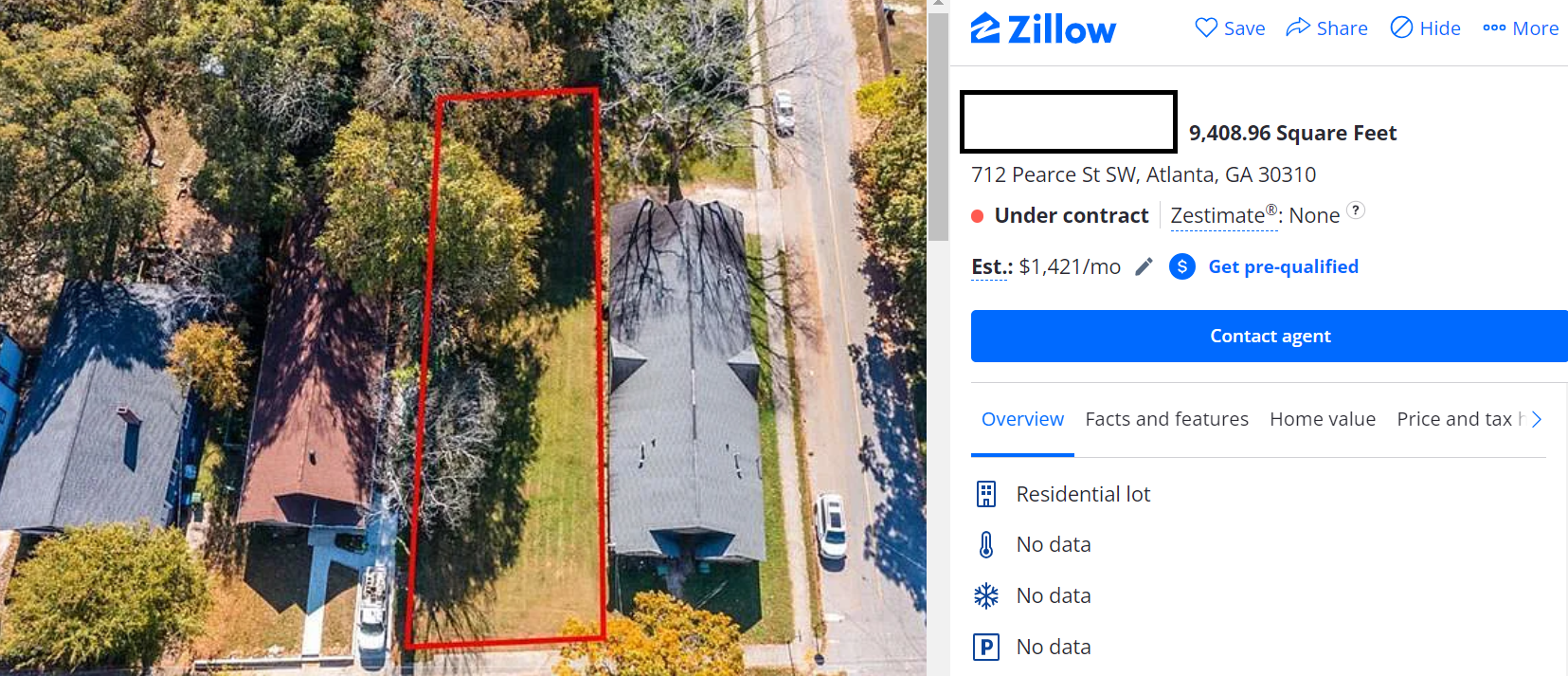
Next item on The Price Is Right: this 9400 sq. foot lot (about 1/5 acre) in Atlanta.
Land Values
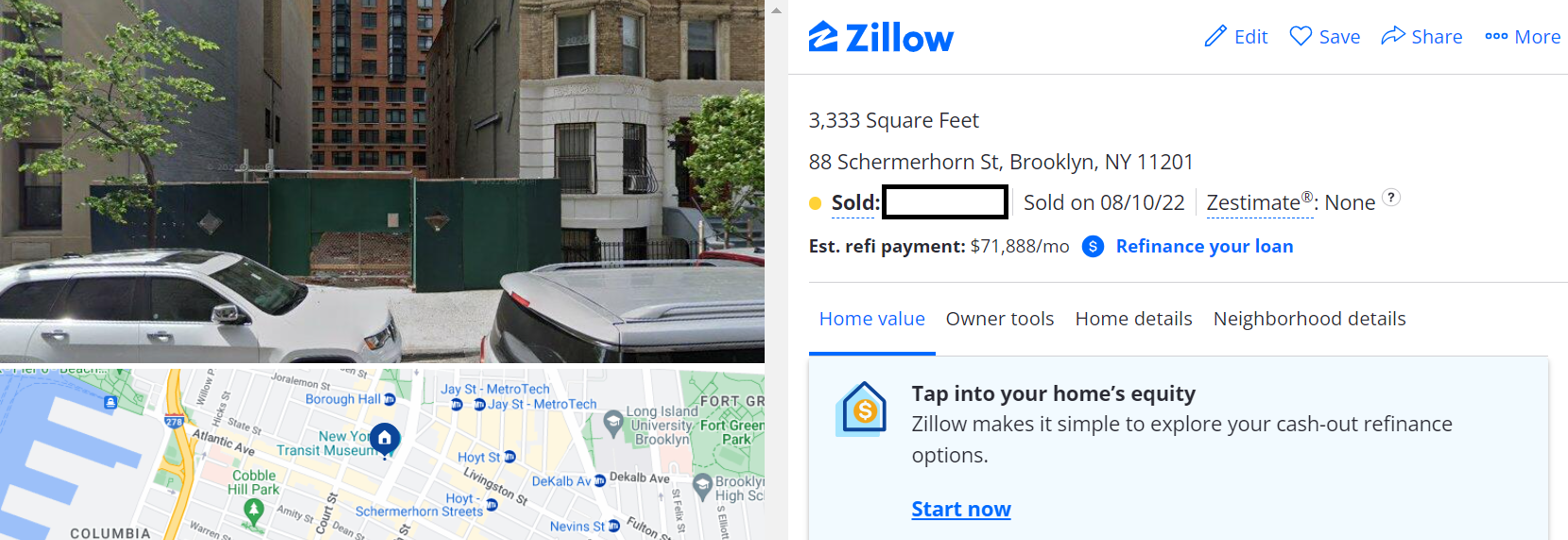
Last item on The Price Is Right: this vacant lot in Brooklyn, NY.
Scale Economies
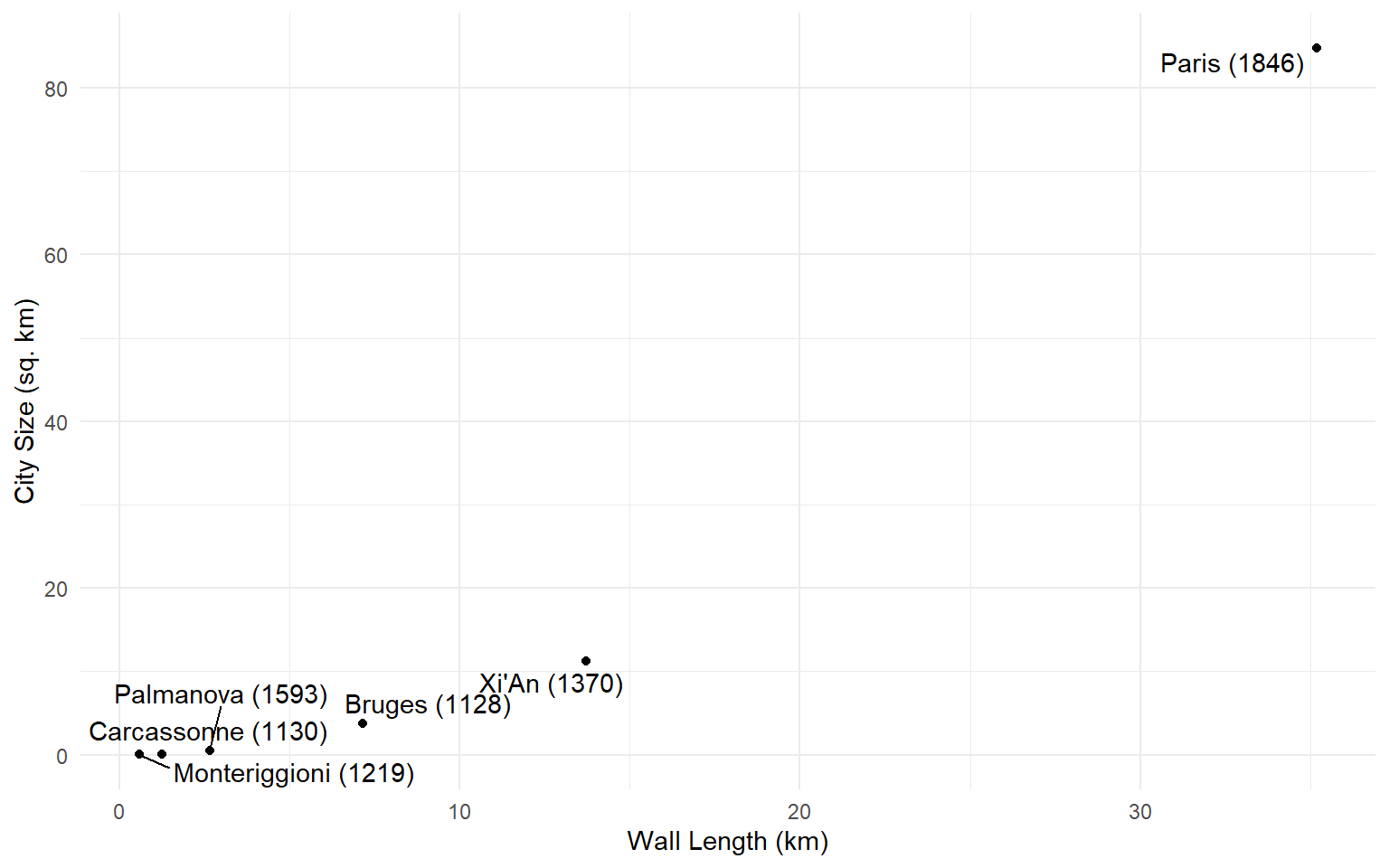
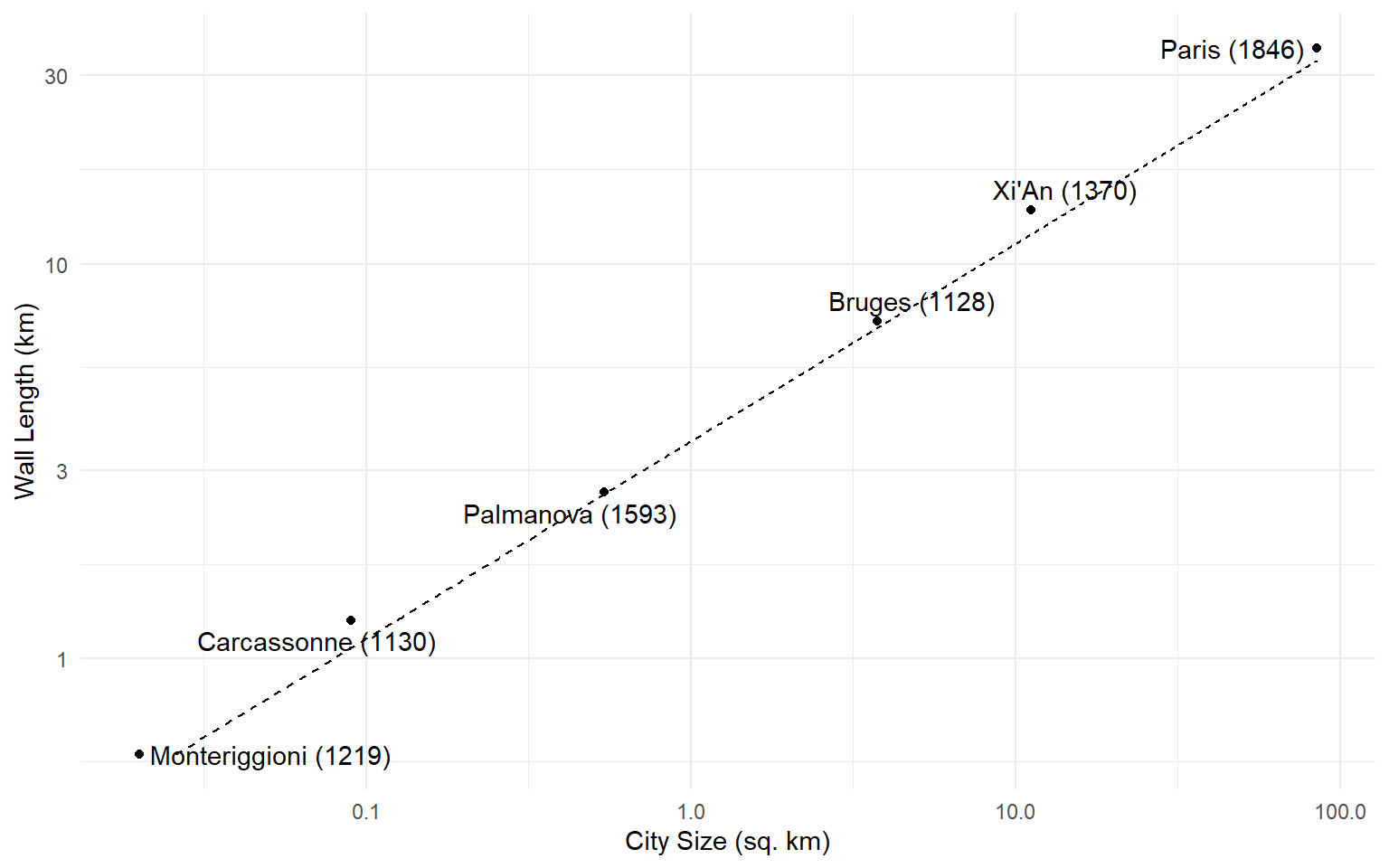
Double the length of the wall, and you quadruple the size of the city you can protect.
Scale Economies from Geometry
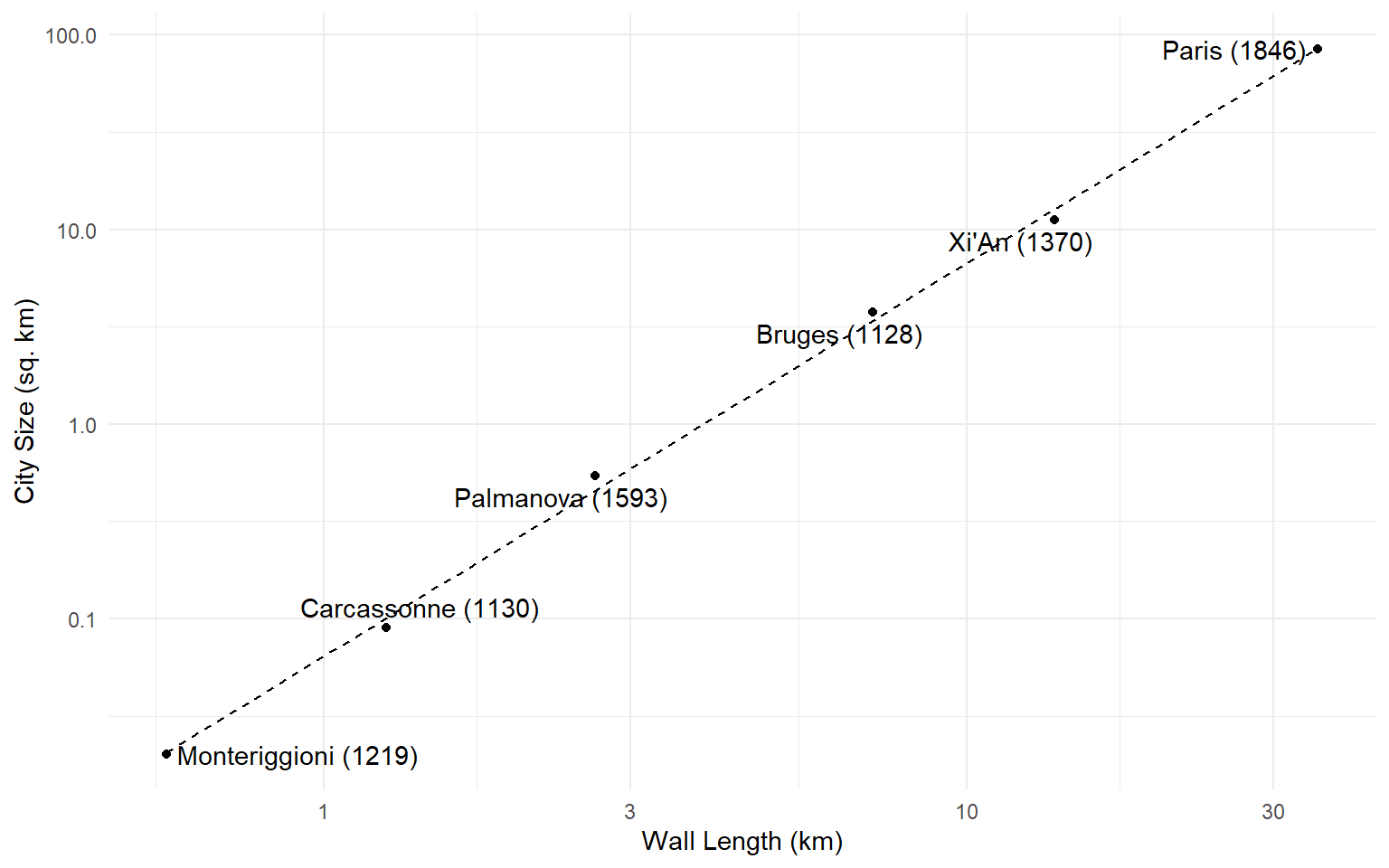
Double the length of the wall, and you quadruple the size of the city you can protect.
Scale Economies from Geometry
To see why, imagine a perfectly circular medieval city.

- The area of the city is \(A = \pi R^2\). The circumference is the length of the wall you need \((C = 2\pi R)\).
- Do some algebra, and you get \(A = \frac{1}{4\pi} C^2\).
Scale Economies
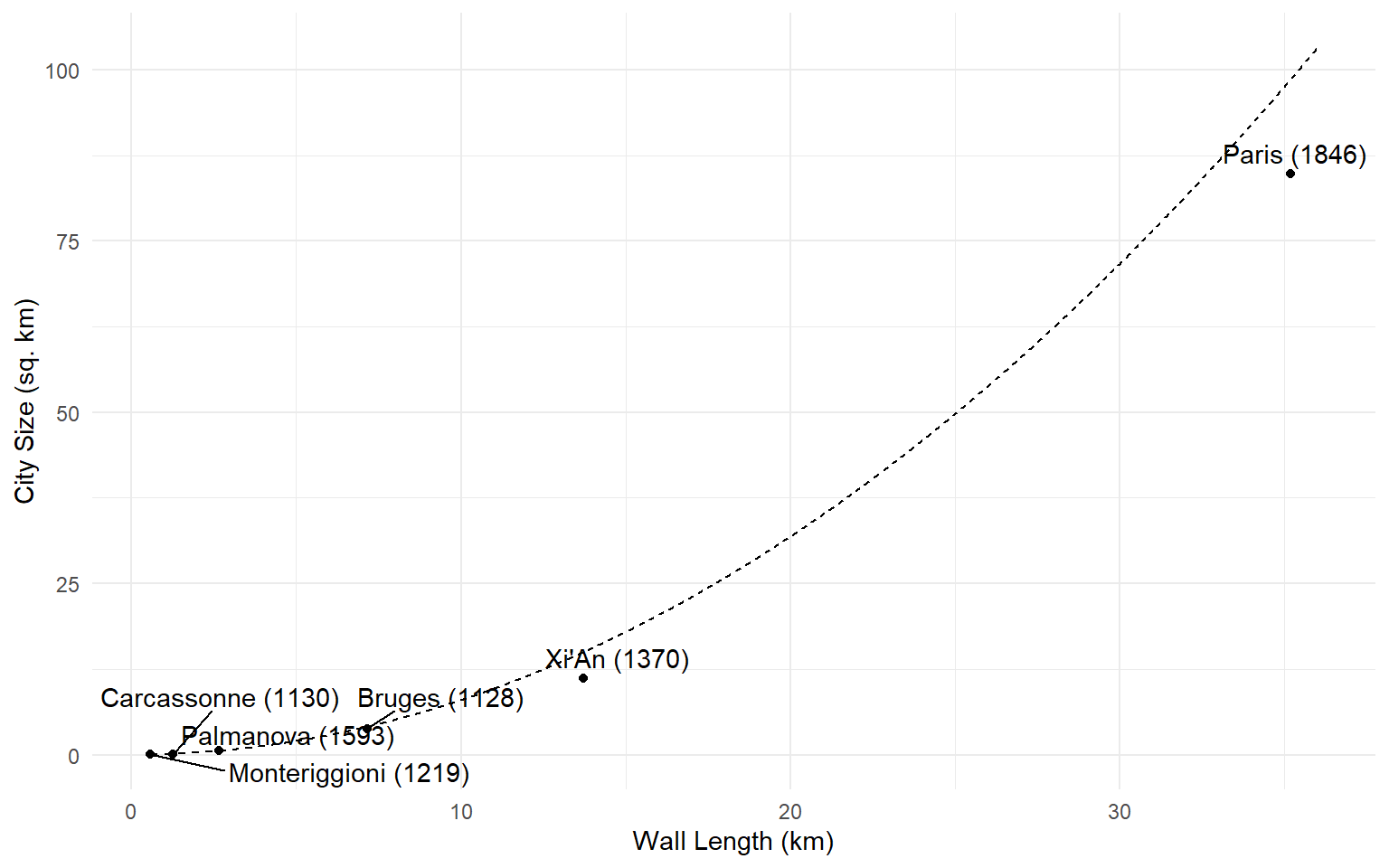
Double the length of the wall, and you quadruple the size of the city you can protect.
Scale Economies from Geometry
Put another way: big cities are cheaper to protect on a per-person basis. Double the size of a city, and you less than double the size of the necessary wall.
Scale Economies from Geometry
This sort of relationship holds for other (more modern) infrastructure as well, like streets.
.png)
Athens has 1,274 kilometers of streets for 128,000 people – roughly 10 meters per person.
Scale Economies from Geometry
Atlanta is 4x larger than Athens. About half a million people live in the city.
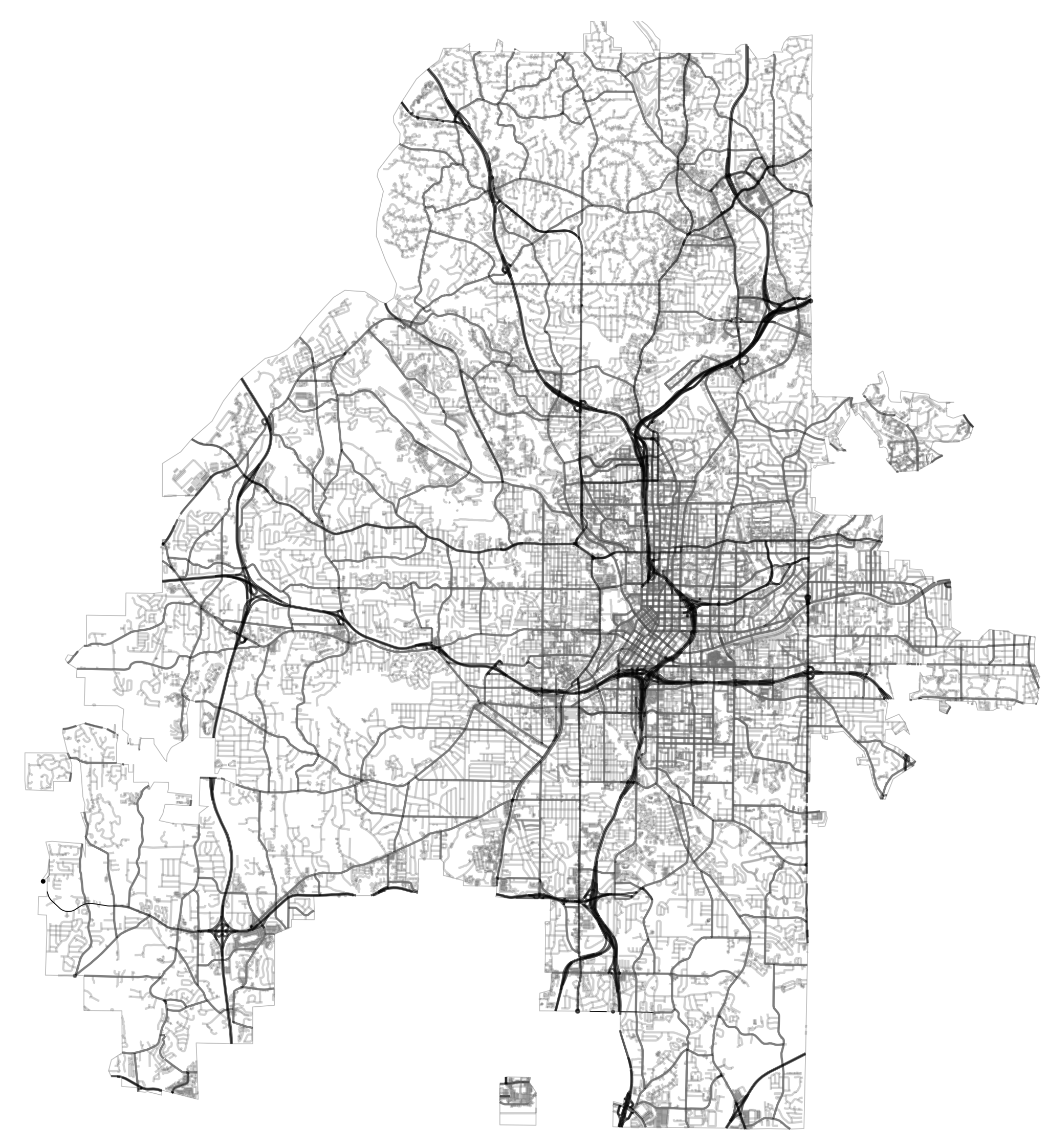
But it only has about twice the length of roadway (3,052 km) – 6 meters per person.
Scale Economies from Geometry
Philadelphia is about 3x bigger than Atlanta (1.6 million people).
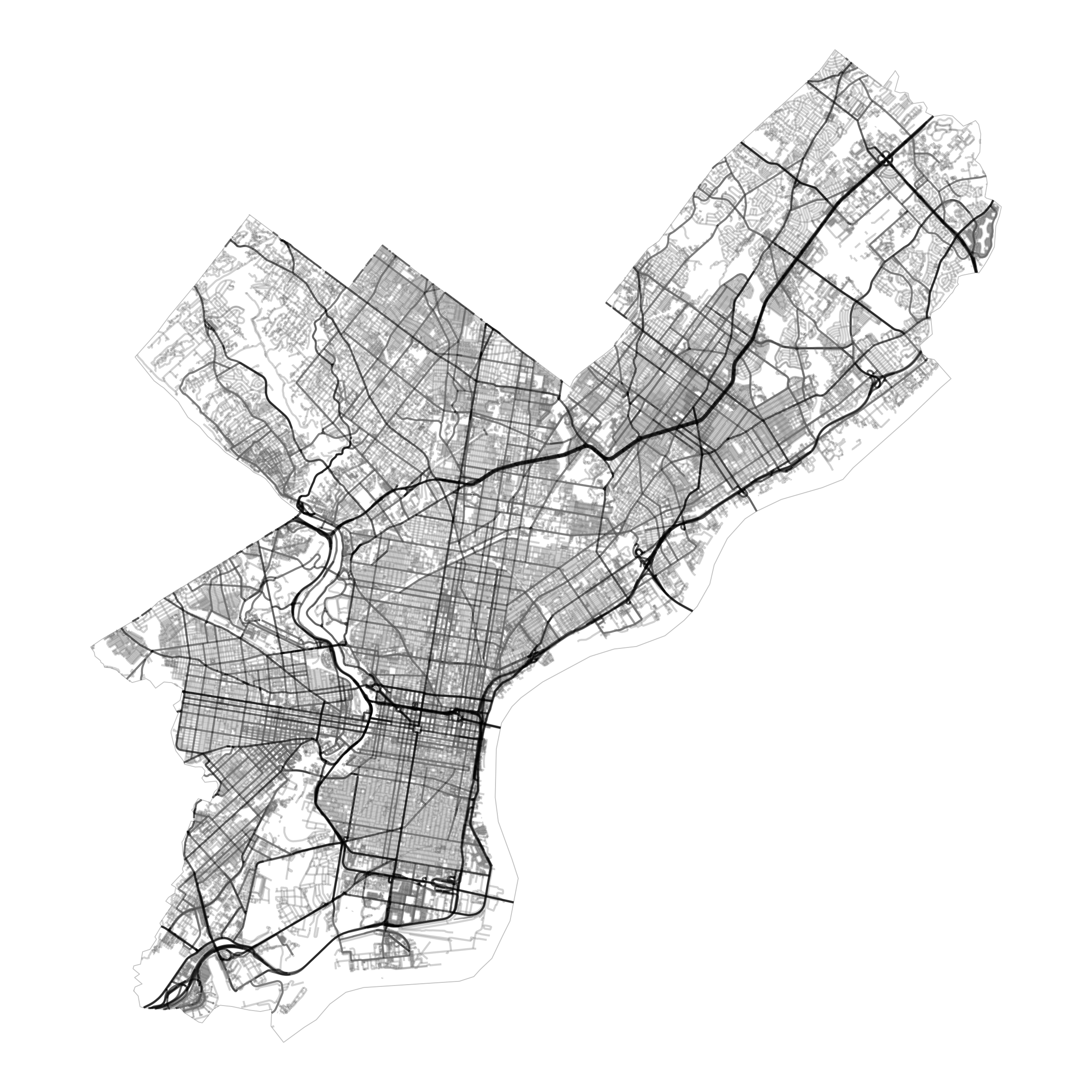
But it only has about 1.5x the length of roadways (4,539 km) – 3 meters per person.
Scale Economies from Geometry
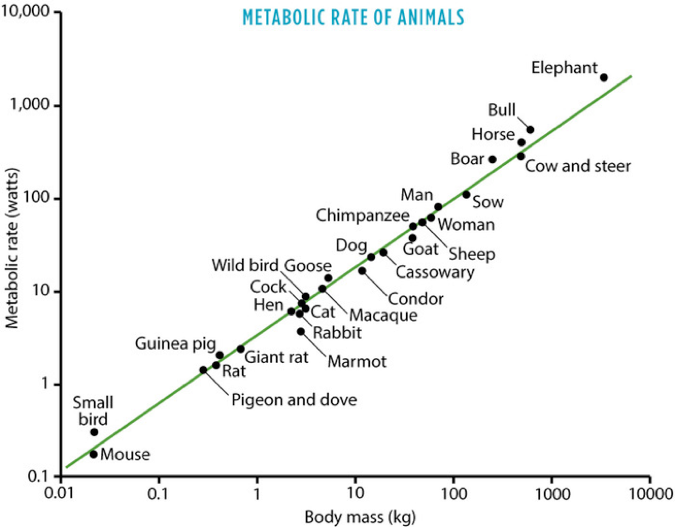
This is all eerily similar to the geometric scaling laws we see in nature.
- Double the size of an animal, and the energy necessary to keep it alive less than doubles.
Scale Economies from Fixed Costs
Another source of increasing returns comes from the way businesses operate.

Each block of cheese costs you \(c\) dollars (marginal costs). You also have fixed costs of \(F\) dollars each month (rent, wages, electricity, etc.).
If you sell \(x\) blocks of cheese, then your average cost is:
\[ \frac{F + cx}{x} \]
Scale Economies from Fixed Costs
Let’s say your fixed costs are $10,000 and marginal costs are $5.
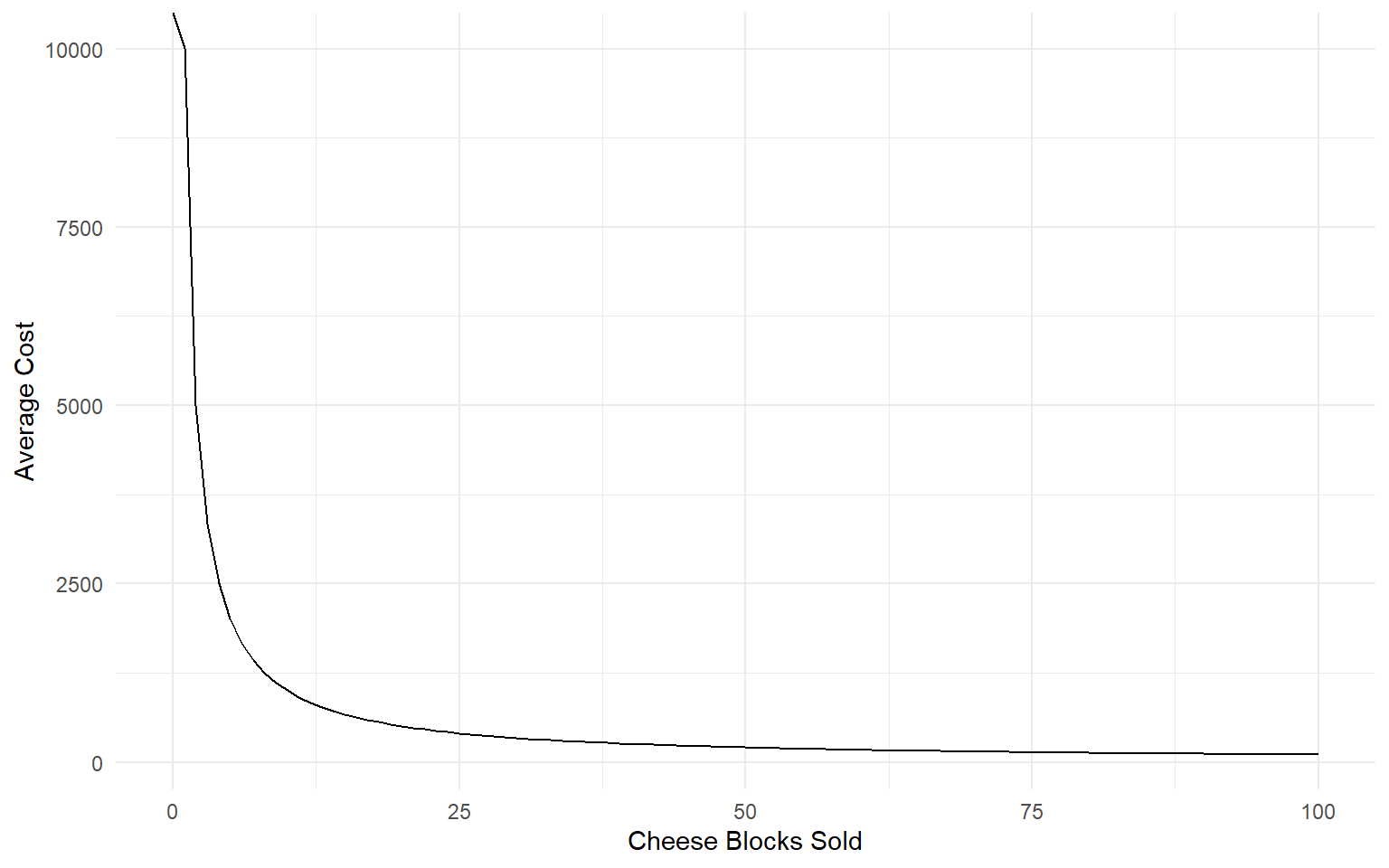
Unless you can sell cheese blocks for $5,000 each, you need a large number of customers in order to cover your fixed costs!
Scale Economies from Fixed Costs
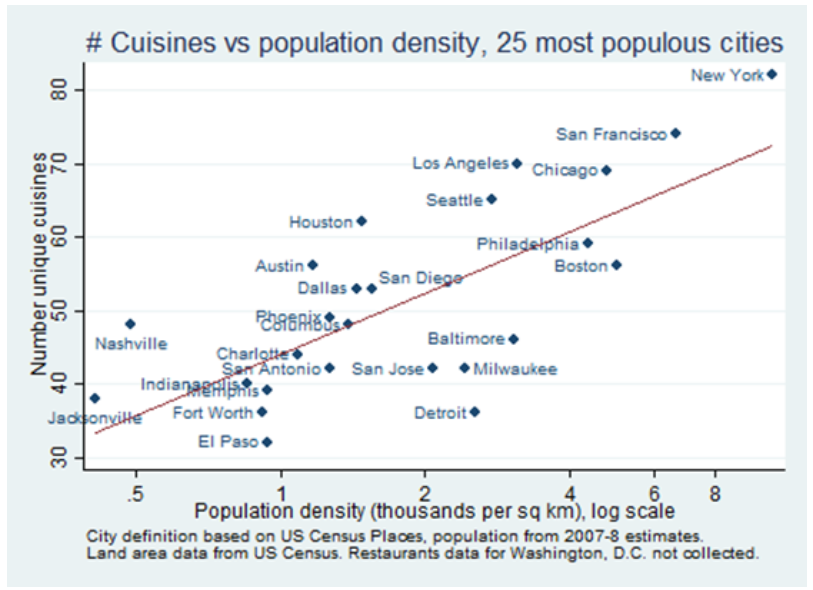
Scale Economies from Fixed Costs
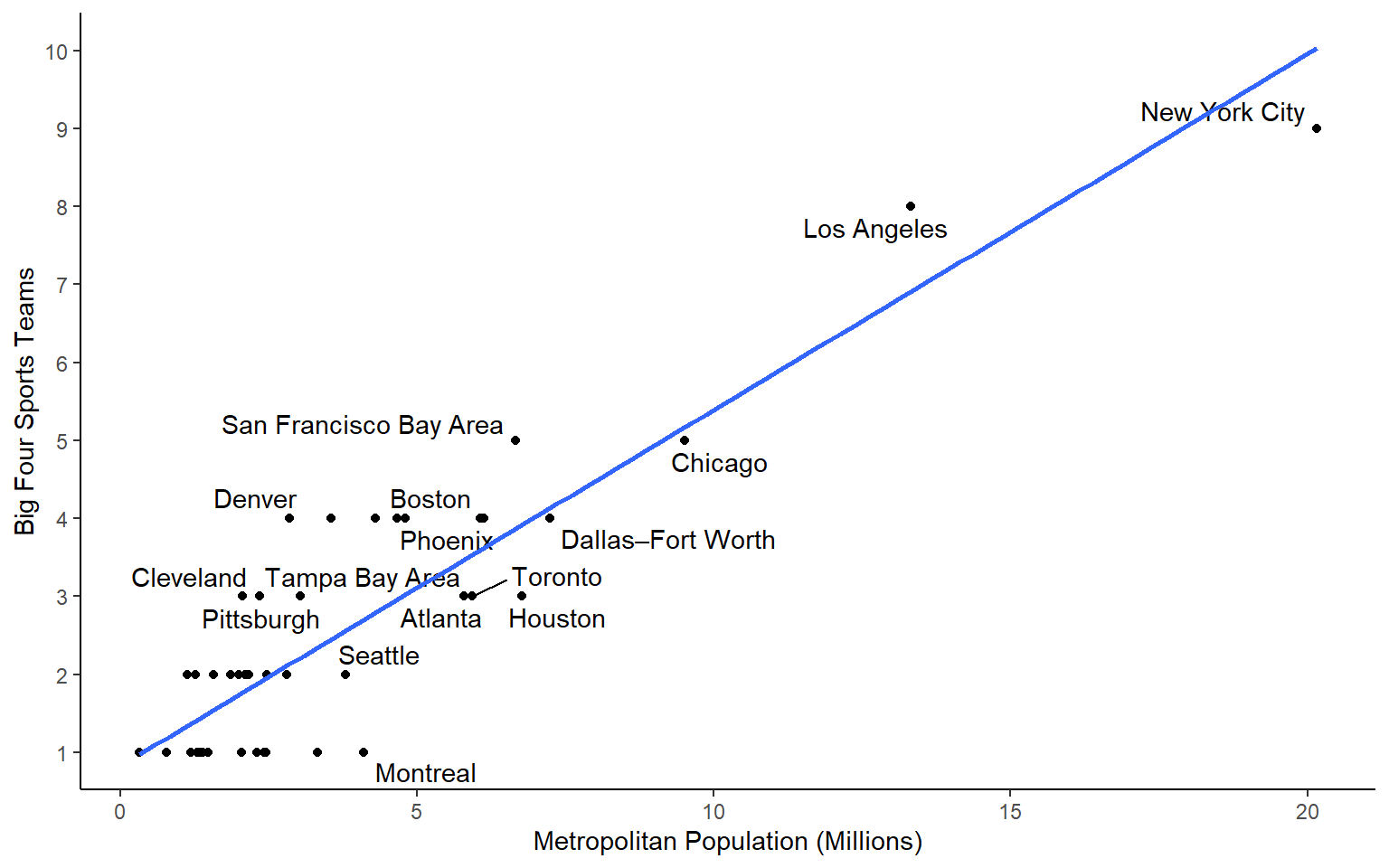
Scale Economies from Networks
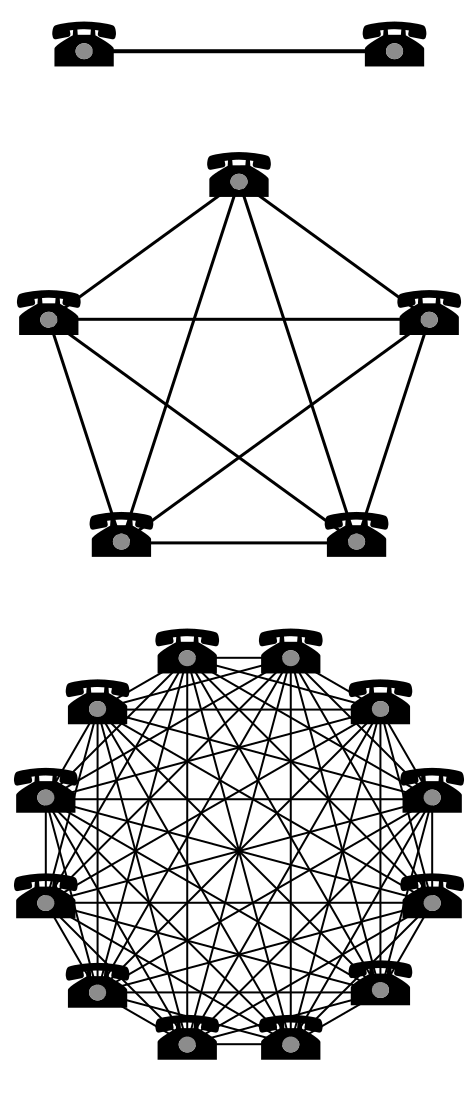
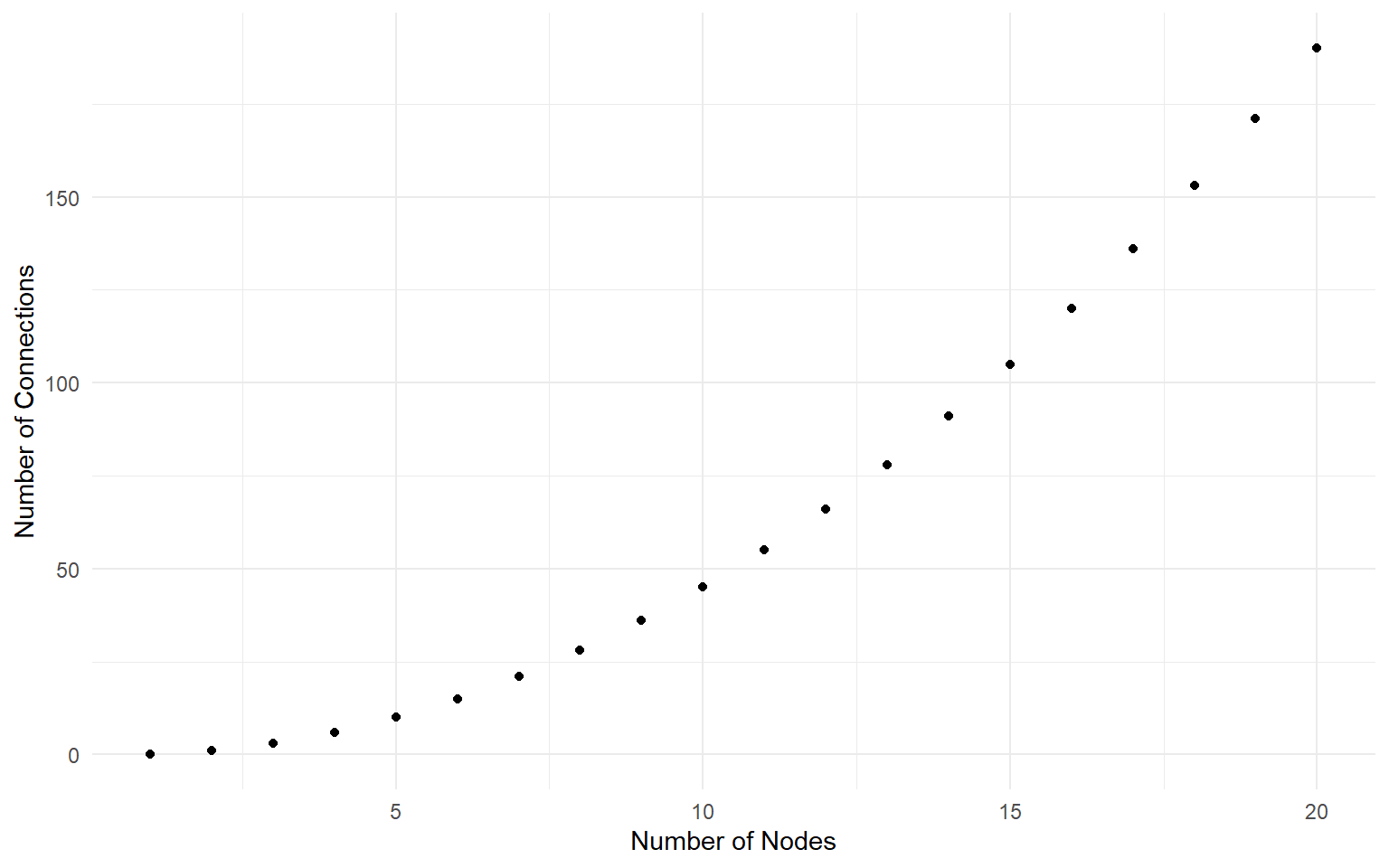
| Size of Network | Number of Connections |
|---|---|
| 1 | 0 |
| 2 | 1 |
| 3 | 3 |
| 4 | 6 |
| 5 | 10 |
| 6 | 15 |
1 telephone is useless. There’s no one to talk to.
Larger networks are increasingly valuable, because the number of possible connections scales with \(n^2\).
Scale Economies from Networks
Metcalfe’s Law:
Scale Economies from Networks
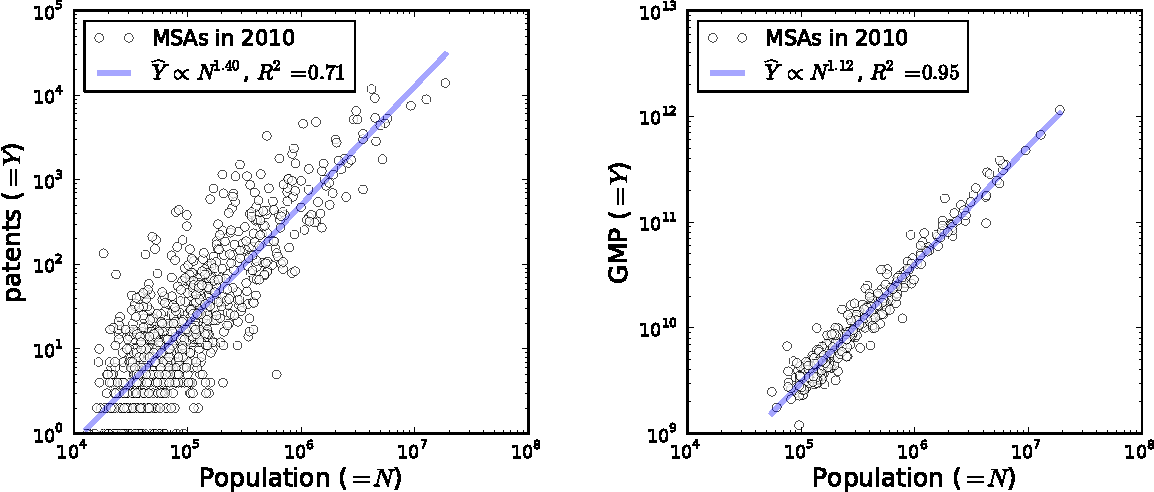
Innovation and creativity come from people connecting with one another and sharing ideas. It’s no surprise, then, that big cities are hubs for innovation:
A Puzzle: Clusters of Industry
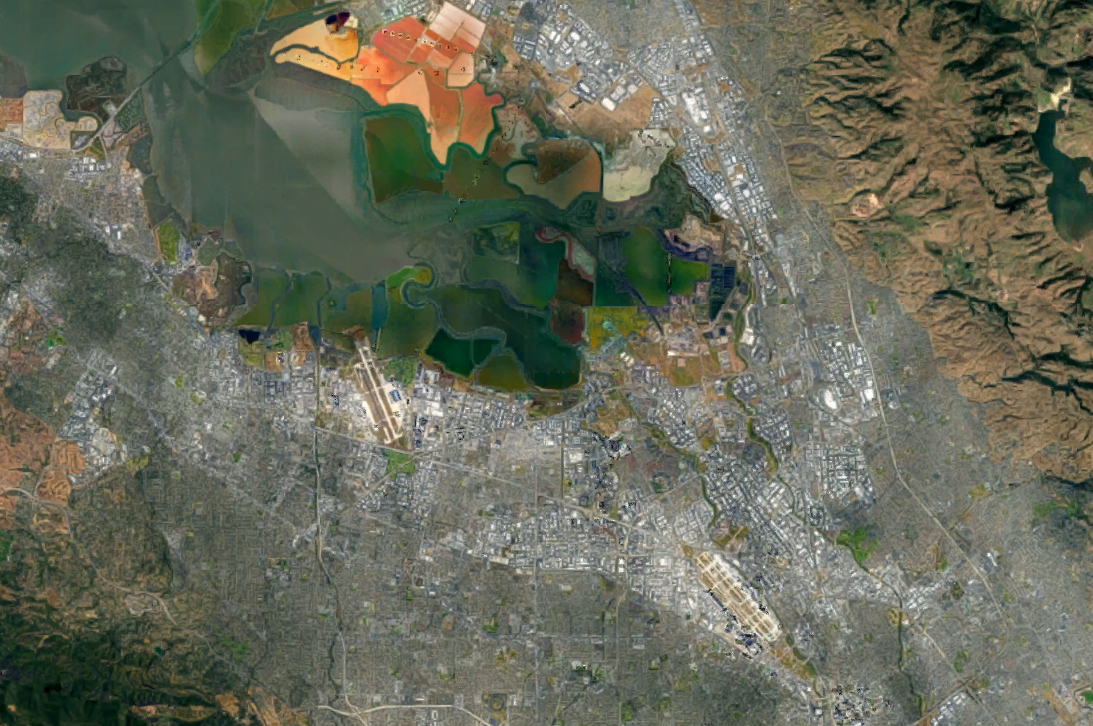
Scale economies explain why individual organizations would want to locate in large markets, but why would multiple, competing firms locate in the same place?
A Puzzle: Clusters of Industry
Scale economies explain why individual organizations would want to locate in large markets, but why would multiple, competing firms locate in the same place?